Orto di Casa Cecconi

My first allotment, and then one thing leading to another…

  • Of webs and apples

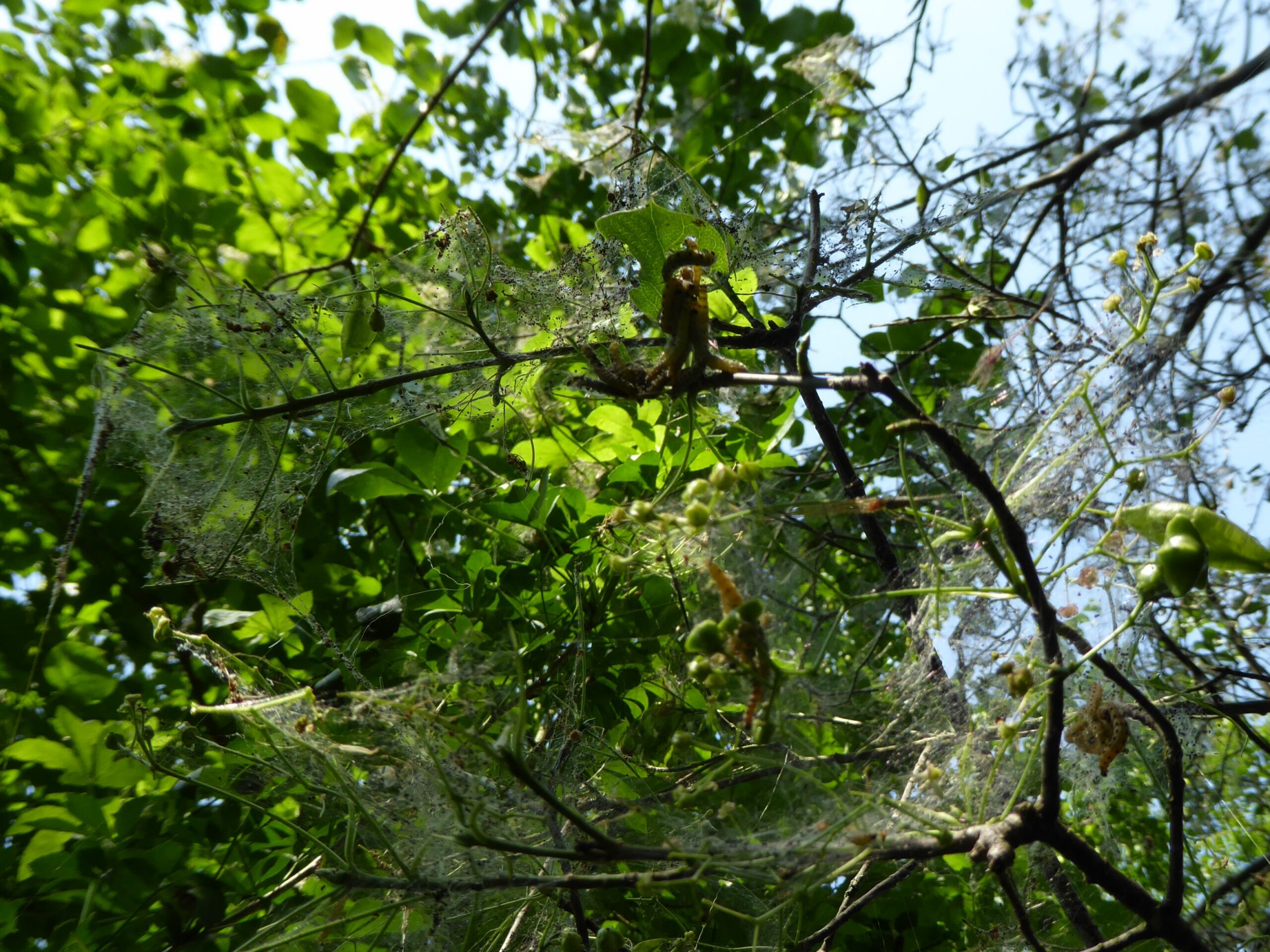
    When I first came to the Netherlands I was shocked by the really extensive moth webing on several plants, which made them look as sick and neglected: not something I was very familiar with, at least in cultivated gardens.

    De Hortus Amsterdam, 2018 : spindle with webbing

    The spindle Ermine moth’s caterpillar also have a habit of hanging from threads in the webs (see pic above):  I distinctly remember that after going through the spindle area of the garden I felt like I should decontaminate, lest I brought some unwanted visitor back with me to the UK. However, both the botanic gardens I visited, and the allotment manager, were very reassuring: the Ermine moths whose caterpillar grow up in the webbing do not generally cause much damage to plants, for how ugly their dwellings might be.

    I have since become much more relaxed myself, and recently noticed that some horticulturists in the UK were concerned about Ermin moths on apples, so I want to reassure you: I have now witnessed this process for 7 years, sometimes quite on a large scale, and my apple trees have sustained no permanent damage. Importantly, while some defoliation occurs, the fruit is anything but damaged. It is not always the same trees that get affected on my plot, so I am under the impression that trees that are already stressed may become easier targets – that is in truth pretty much the case with all pests and diseases.

    This year the most affected is my ‘Groninger Kroon’ apple, which is in its off-year of biennial bearing. That means that last year this tree was laden with apples, in a year that in itself seemed to be a sort of mast year* for fruit trees. 2025 was a very stressful year for plants because of drought and heat, following from a year with an extremely wet spring: plants will react to stress producing more fruit so that the species can survive if the individual succumbs; producing more fruit of course makes a dent in the reserve resources of the plant.

    Back to the Ermine moths. If you have the stomach, you can just grab the tip of a branch and pull away the web with all the caterpillars in it: I used to feed them to the fish in the ditch. However, you don’t really need to do anything, besides encouraging wildlife around your tree. Some birds will eat them.

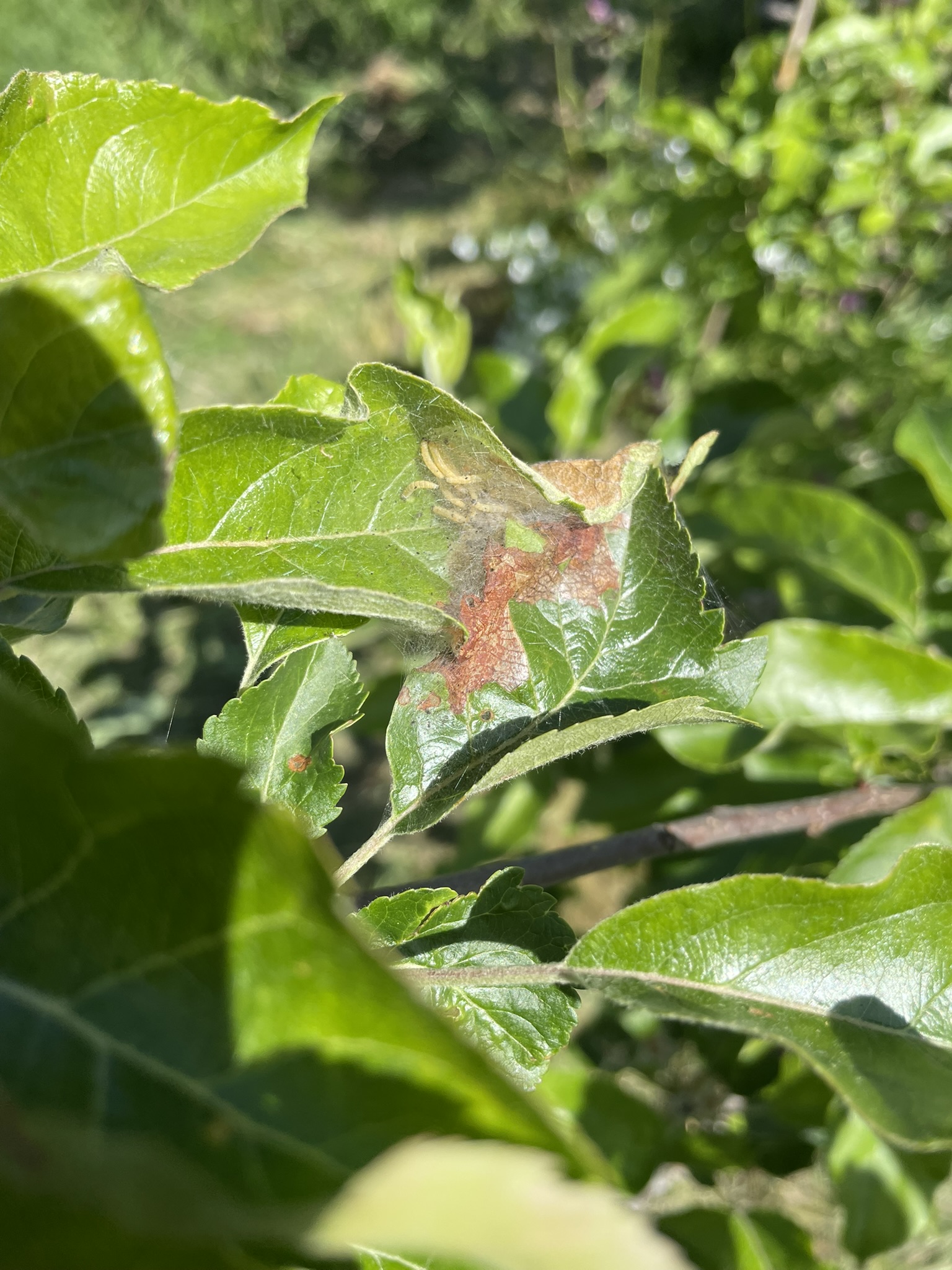
    Mining leaves: early stages
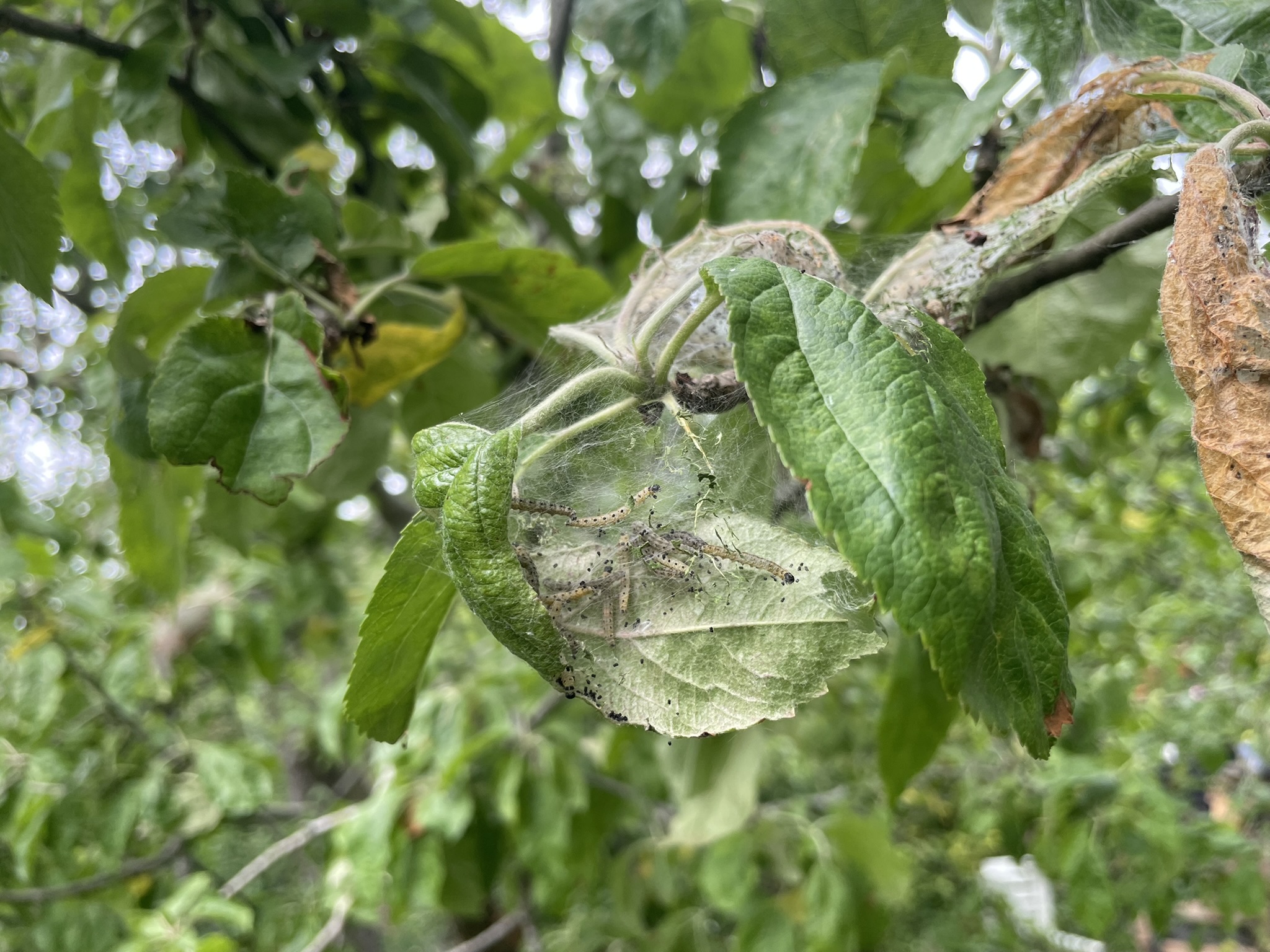
    Webbing: later stages
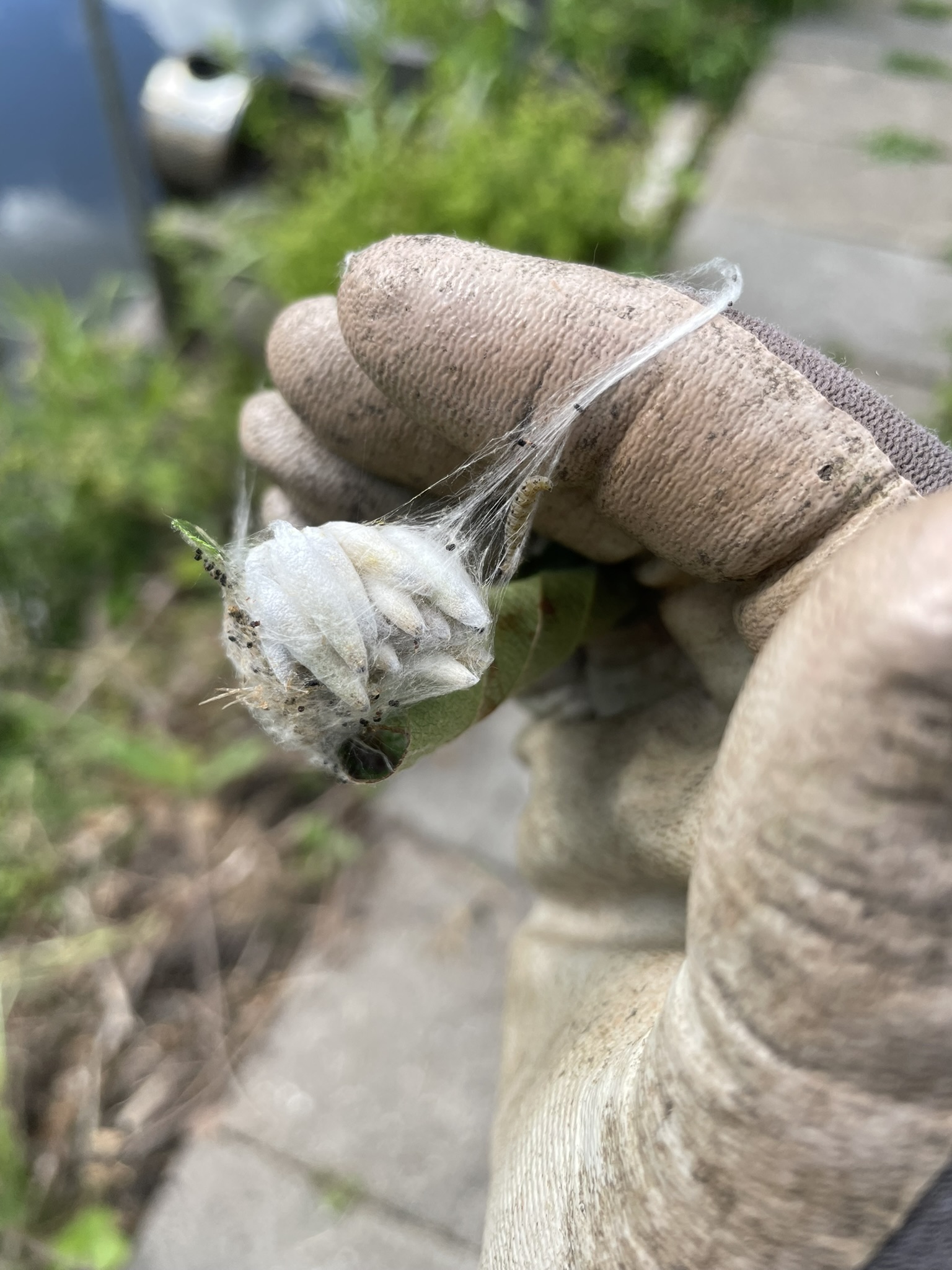
    Pupae inside web
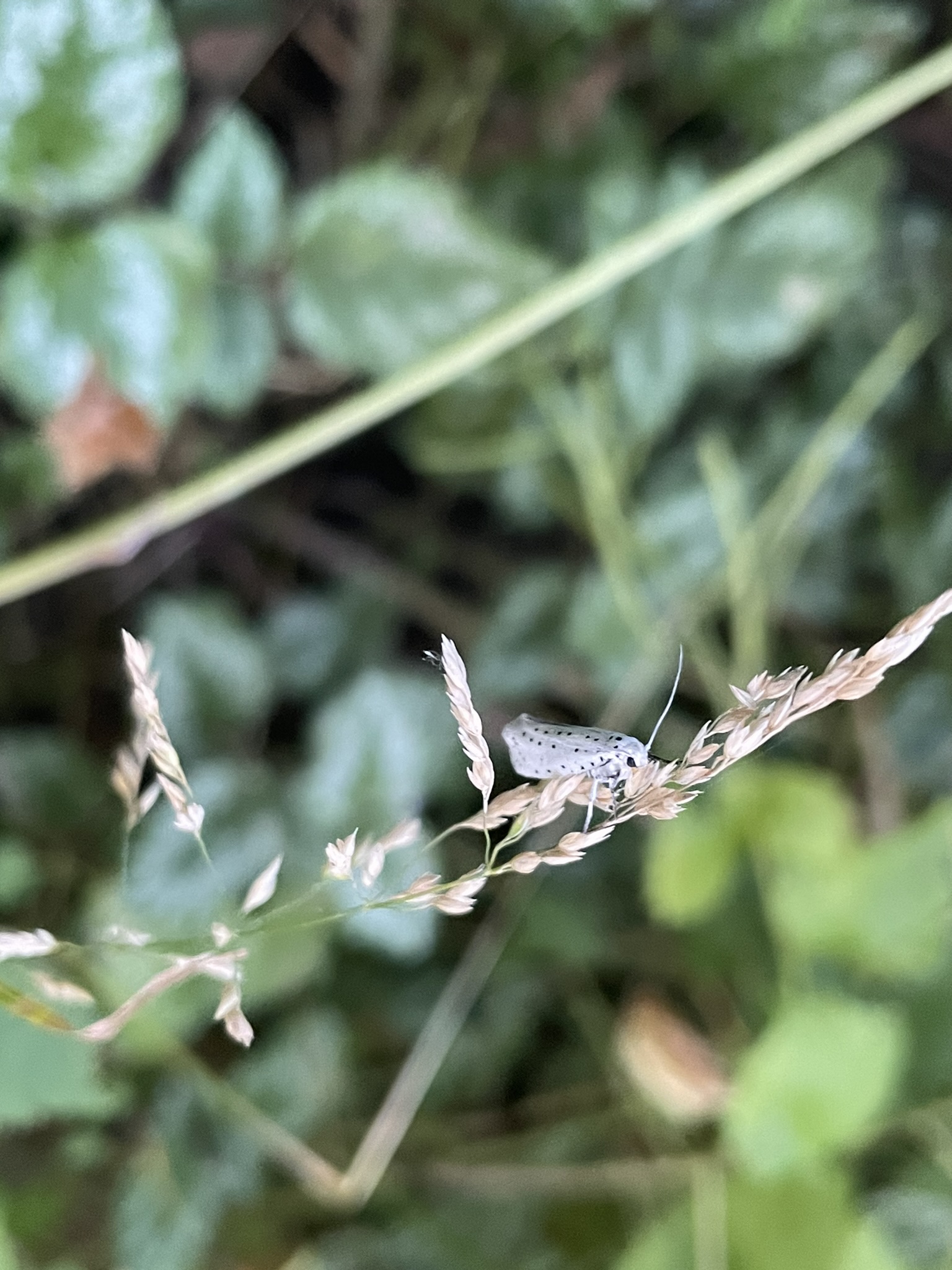
    Adult Ermine moth

    If you leave them alone, they will just go about their life: appear in May, at first mining fresh leaves around innocuous-looking webs. They will keep growing, going through five instars (stages of growth, in the pictures above they look yellow at the beginning, then green with dots), and with that the webs will become larger and filled with frass** and the tree mayl start looking like the stage for a Halloween play. The caterpillars will then pupate inside the webs and finally turn into little white moths with black dots: they derive their name from their livery, resembling a stoat’s winter coat. At that point, their presence becomes unobtrusive again, while they fly around, mate, and lay their eggs on the bark of trees. I have never noticed those, but there is a picture on Washington State’s website. The young larvae that emerge from the eggs just overwinter under shelter of the egg batch, before coming out to feed again next year.


    * mast year a year when group of trees seem all to produce more fruit in unison. It occurs mainly in a forest setting, and you can read a fascinating hypothesis of how it works on the Woodcock Nature Centre website.

    ** frass the collective name for insect droppings, often collecting in or around the holes they dig into fruit, but in this case inside the webs

  • Deformed leaves: when aphids are the culprit

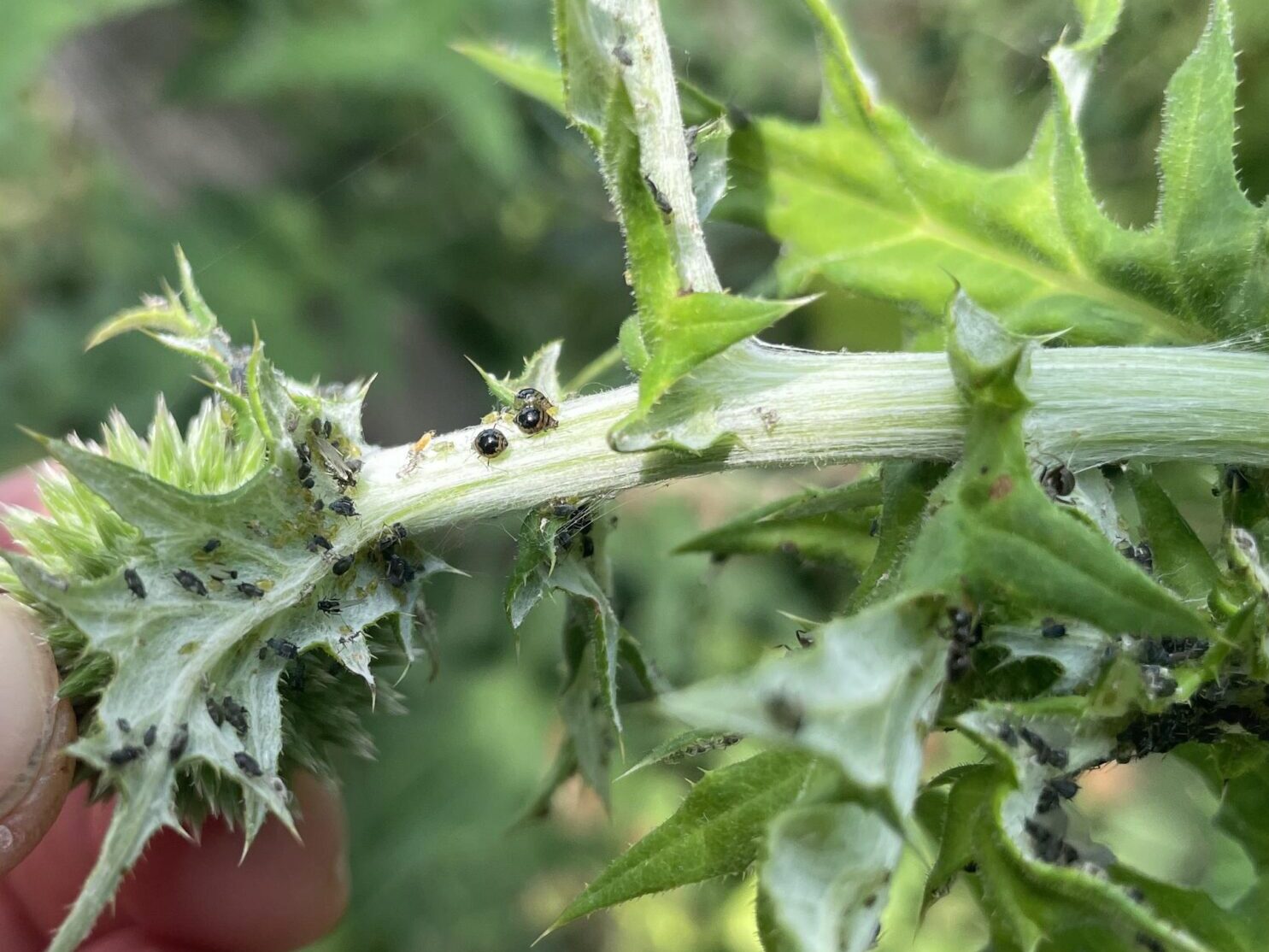
    A little bit of warmth in the spring air and aphids are round the corner. Some of them feed on the underside of leaves, which causes blistering and/or deforms the leaves, so they curl up. Given as I spent some time in the last few weeks explaining red blistered and curled leaves, this post on aphids follows quite naturally. Last year was aphid heaven, greenflies, blackflies, all the colours of the rainbow and a range of sizes too! I don’t think I have ever seen so many of so many species, some quite interesting. Maybe one day I will write a special issue.
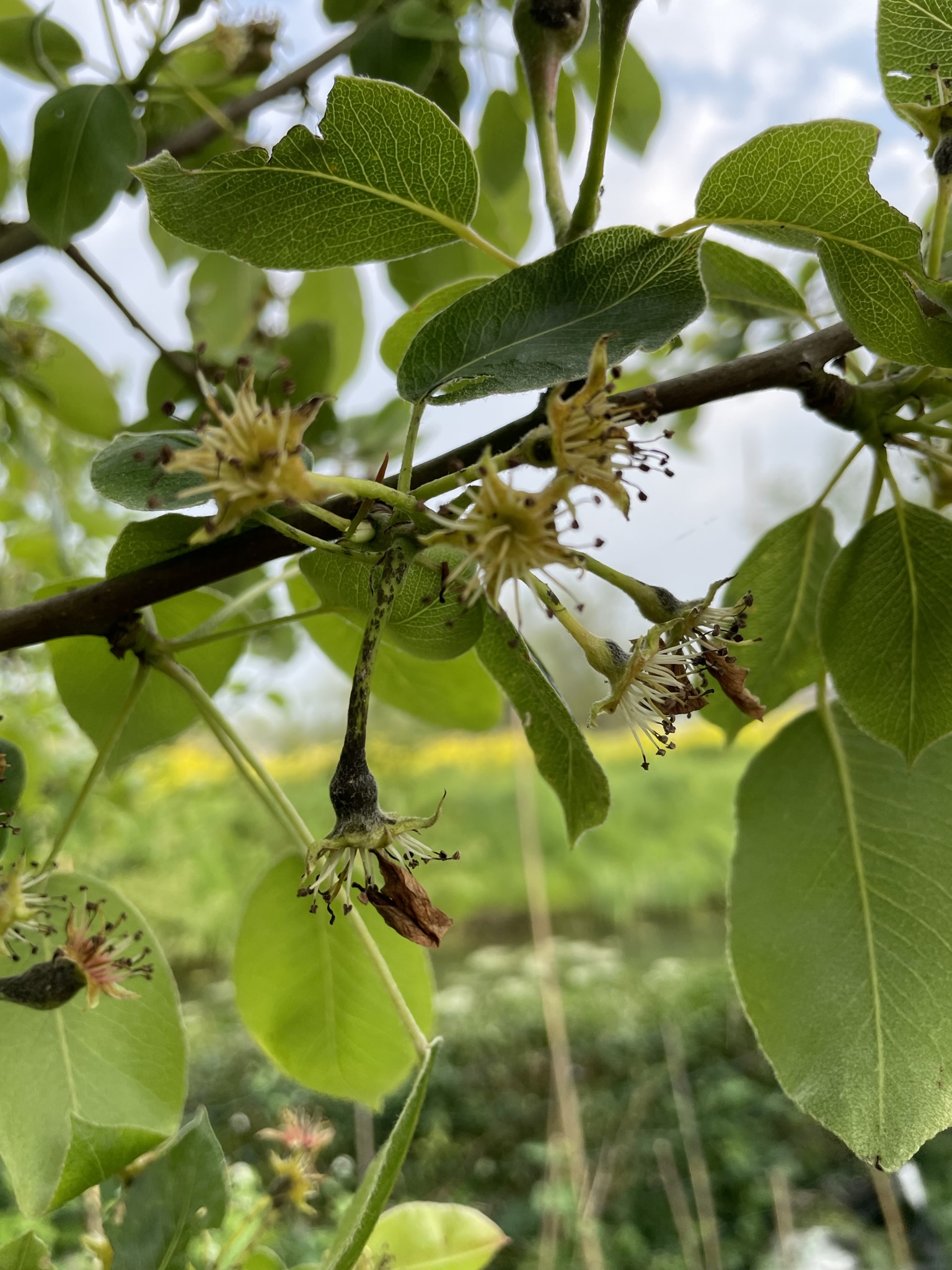
    While it is true that some aphids can spread viruses from plant to plant, as they feed by piercing plant surfaces with their mouth parts to suck the sap out, in a biodiverse garden the most sustainable approach is just to bear with them. Predators populations need a little time to build up when food becomes available, but rest assured they are already on the case and will soon get rid (or at the very least manage) the problem for you. Ladybirds of all ages, as well as hoverfly and lacewing larvae, are keen on the little buggers and rather voracious (we are talking dozens to hundreds a day). There are then also tiny parasitoid wasps that lay their eggs in their bodies, turning them into shiny little golden globes. Most aphids are monophagous, I read, some have lifecycles involving two different plants, and some are quite happy to feed on several kinds of plants. In the latter case, planting sacrificial crops can be a complementary strategy.

    As not so many people are familiar with these essential helpers in a garden, I made a linked post on aphid predators.

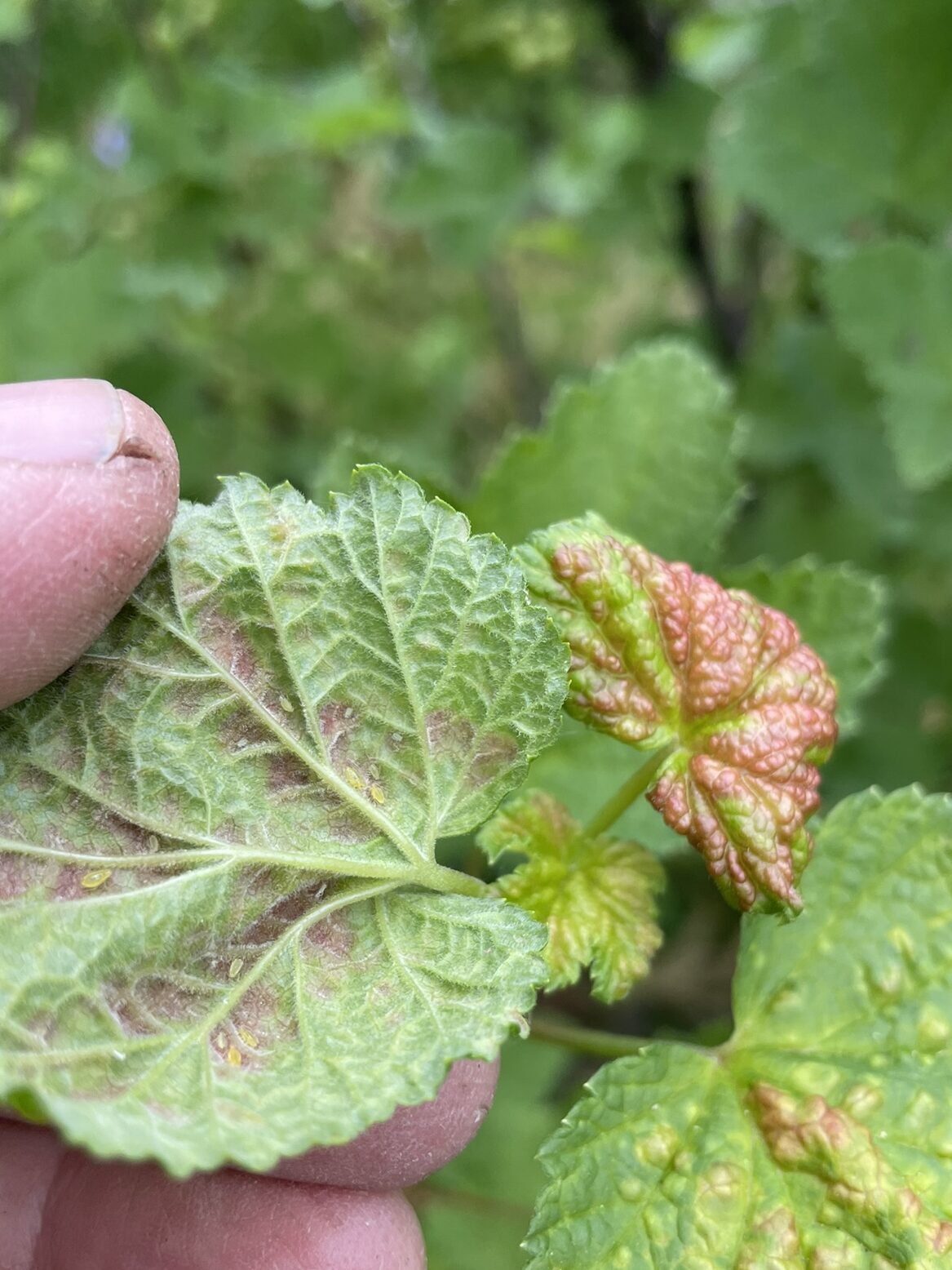
    Currant blister aphid (Cryptomyzus ribis)

    Red blisters and yellow aphids


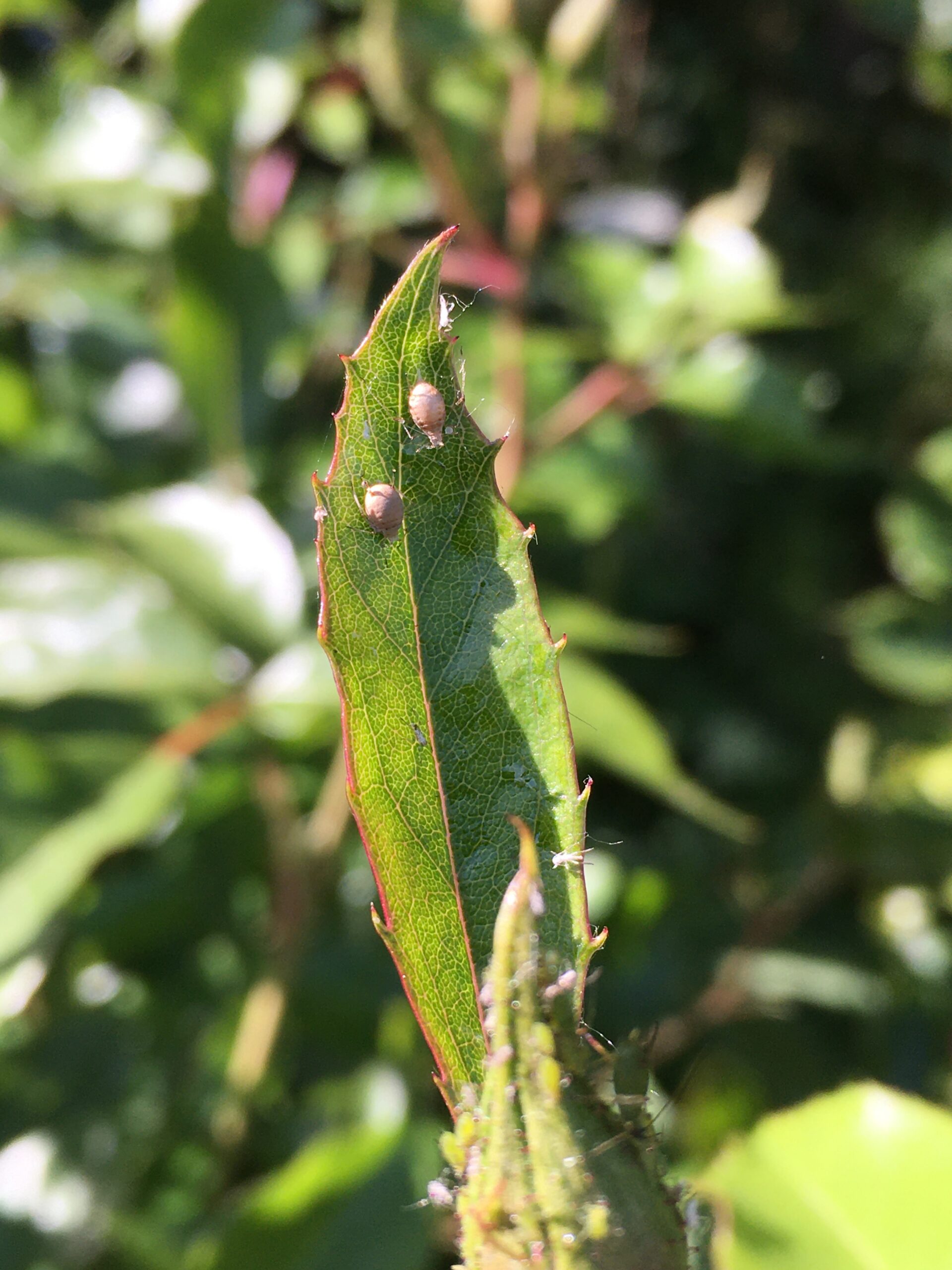
    The most common culprit for red blisters on fruit plants, to be spotted on all sorts of currants, red, black or white at this time of the year. The blisters are on soft new growth, at the top of the branches and have no apparent cause, unless you inspect the underside closely. These aphids are quite small and yellow-green in colour and, when feeding, they inject chemicals in the leaf that deform it: a sort of gall. In my experience they do not generally drip enough sap to make leaves sticky and cause sooty mould, and that is why the blisters appear to have no cause.

    These bugs can live all year round on currants, but most often they have a two-plant lifecycle. They overwinter as eggs on Ribes (their primary host) and live on the underside of leaves as wingless individuals until the summer, when winged individuals move onto their secondary host(s): a range of plants in the Lamiaceae family, mainly Stachys species and Lamium album.

    On my plot, where both hosts are present in droves, these aphids seem to make a fleeting appearance in the early spring. They do not bother me, so I probably just stop noticing after a while. Having had a look underneath a leaf in June, they were gone except for some parasitised specimens, so probably dealt with by parasitic wasps. You can pull off and dispose of the offending leaves, if you wish.

    More pictures on the website of Plan Parasites of Europe.

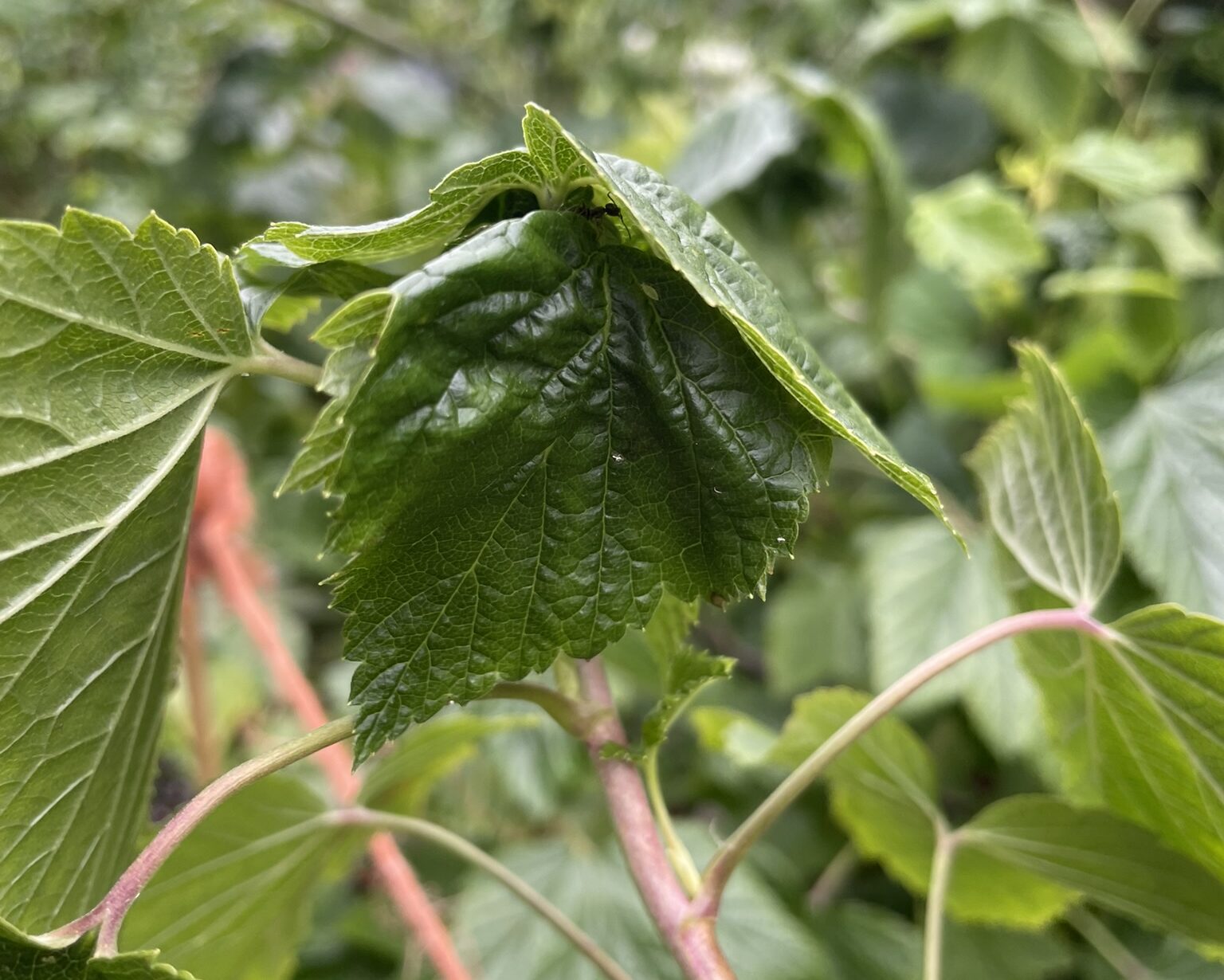
    Aphid ‘nest’ under leaves


    Other Ribes aphids that cause the leaves to deform and lean down against the stem to form a nest are the permanent (black)currant aphid (Aphis schneideri), waxy green aphids that are farmed by ants.

    Several species of aphids that favour soft fruit are described in this AHDB Crop Walkers’ Guide to bush fruits.


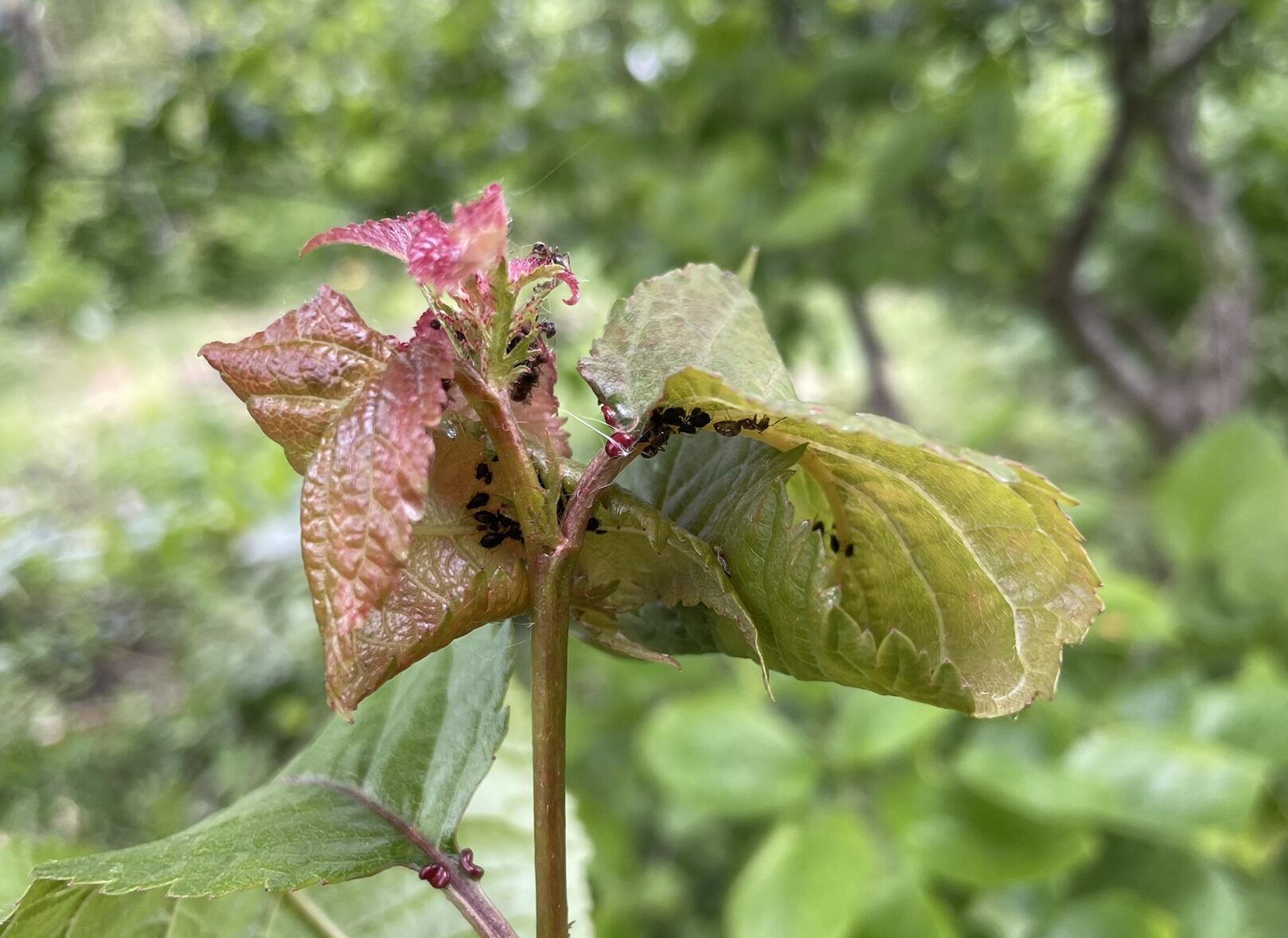
    Cherry blackfly (Mizus cerasi)

    Blackfly under cherry leaves

    This is a messier aphid, dark in colour, that causes the leaves at the tip of new shoots on cherry (and some peaches) to get deformed and curl from the tip up. It makes quite a visible mess and drips a lot of sap, so it is both farmed by ants (can you spot the one in the picture?) and may cause sooty mould on the surrounding leaves.

    This is another aphid with a dual host lifecycle. In the summer they become polyphagous and disperse on a range of plants that include a range of speedwells and Galium.

    If you can bear with them, just leave them be. The leaves are permanently damaged, but predators come quickly to the rescue: the mess they make doesn’t go unnoticed. In a European study, hoverfly larvae were observed to be keen on them.

    Like pasties, these critters have crimped edges. Have a look…


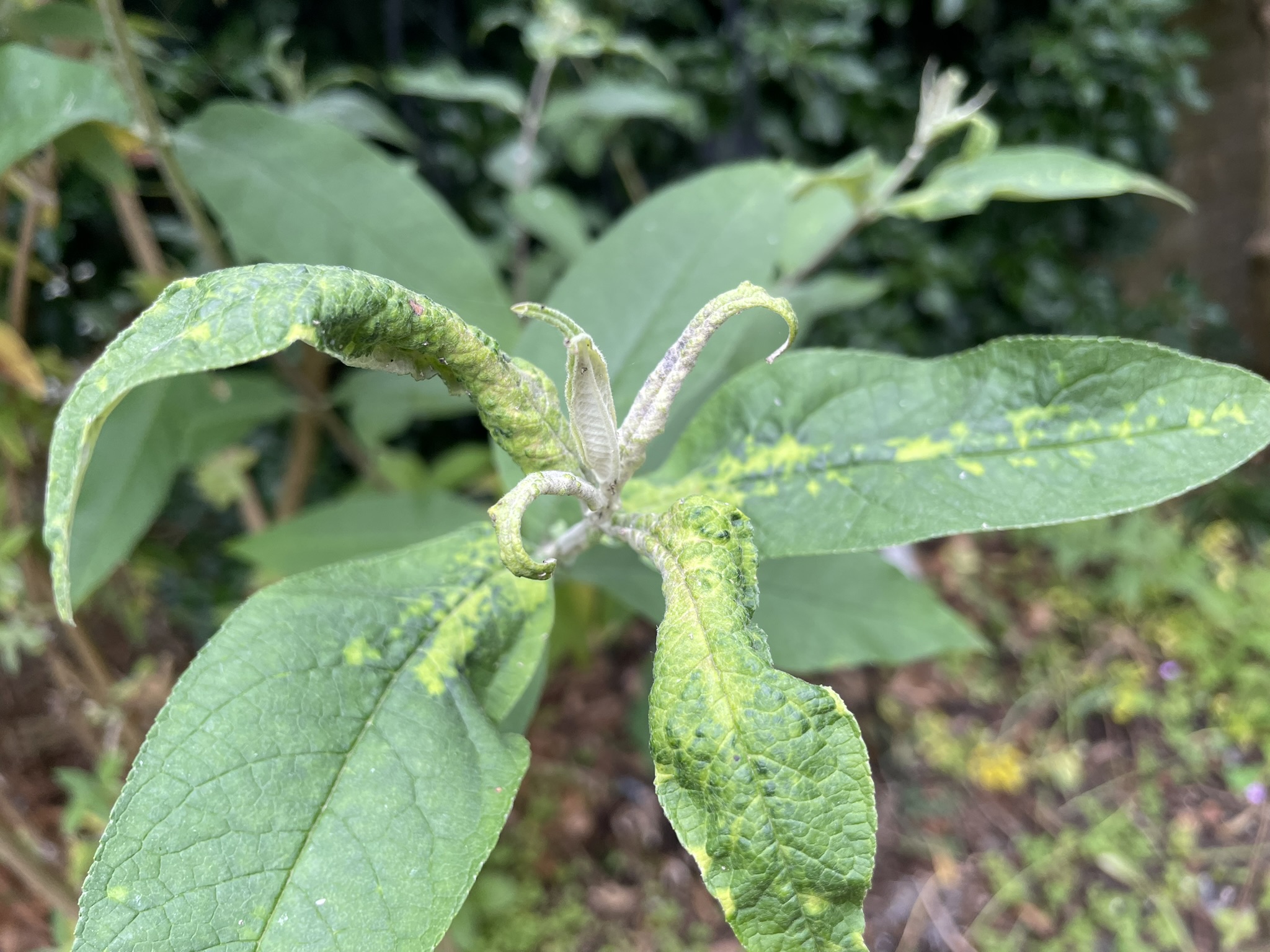
    Melon-cotton aphid (Aphis gossypii) on Buddleja

    Those above are the most common aphids that affect leaves on fruit that I can think of. In the last couple of years, the ornamental Buddleja has started having a noticeable problem with aphids: the RHS is investigating the extent of this new issue and any sighting of deformed leaves with yellow discolouration can be reported. Initial alarm was caused by the resemblance of symptoms to viral infection; however, test results were clear. The damage is mostly harmless and likely caused by the melon-cotton aphid (Aphis gossypii), a polyphagous bug that – as the name reminds us – is particularly fond of Cucurbitaceae (under glass at our latitudes).
    My garden her in the Netherlands is not exempt: one of the two Buddleja plants I have is particularly susceptible, as you can see in the picture below.

    Buddleja branch tip with deformed and yellowing leaves


    Im pretty positive that for each plant on earth there is at least an aphid species that has a taste for it! I will write about aphids again.

    For now I will just conclude by briefly going back to what I mentioned at the beginning of this post: aphids can transmit viruses if they visit an infected plant and shortly afterwards – that is in the ‘lifespan’ of the virus outside its host (virus are not technically alive, hence the inverted commas) –  they move on to feed on another one that is also susceptible. A number of aphid species, for example, are suspected to be vectors for the Plum Pox Virus (see this Defra factsheet), which is a nasty disease, like most viruses. A biodiverse garden puts obstacles in the way of aphids, so that they are less likely to jump from plant to plant, spreading diseases. For one, plants can work as phyisical barriers in the way of aphids; polyfagous aphids can end up on plants that are not susceptible to the virus and feed on them, thus interrupting the chain of infection; a diversity of plants offers more opportunities, not only for aphids but for aphid predators too; and so on.

    There are AHDB Crop Walkers’ Guides for most fruit crops and some ornamentals on their website, where you can find more information.

  • Aphid predators

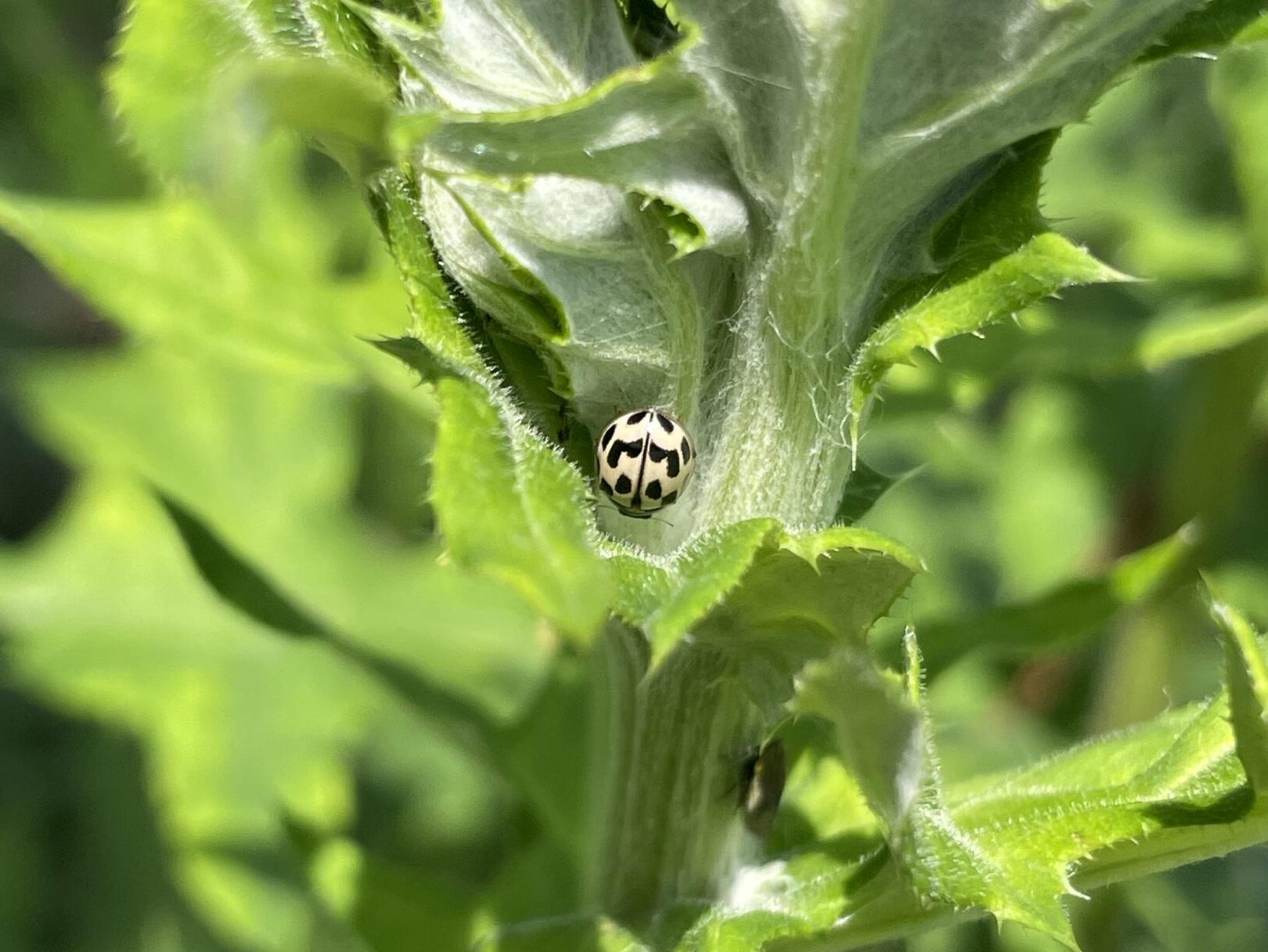
    Ladybirds and their larvae, as well as (some) hoverfly and lacewing larvae: sworn enemies of aphids and rather voracious critters – we are talking dozens to hundreds victims a day. Add to those parasitoid wasps that lay their eggs in the aphids’ bodies, turning them into shiny little golden globes, and you have an arsenal to protect your plants, if only your garden is enticing enough for them to come and stay.

    Apologies for making a point of this before proceeding, but I still see too many bee hotels in pristine courtyards immaculately weed-free: bugs need not only a home with the appropriate environmental conditions (housing materials, right exposure, etc) but regular food supplies. When they go hunting, it might take a while to find pests that are not in their immediate surroundings, as they will first stop at the closest buffet… and if ever they get to a buffet that is further away, it might take a while for them to build up numbers.

    How can you tell the ‘good’ bugs apart from the ‘bad’ ones? Given the amount of posts I see in the groups I am in, where people get scared about anything they see on their plants, I think it rather important to show exactly how the aforementioned bugs look like throughout their lifecycle, which incidentally in all their cases is of the kind EGG – LARVA – PUPA – IMAGO (aka adult).

    I am afraid I do not have any pictures of the eggs of any of these insects, but you can search for them online. Without a magnifying lens, most eggs look pretty much the same; they are often laid on the underside of leaves or on petioles and stems, singly or in groups, except for those of the parasitoid wasps that are laid singly inside an aphid, over and over again.

    Ladybirds (family Coccinellidae)

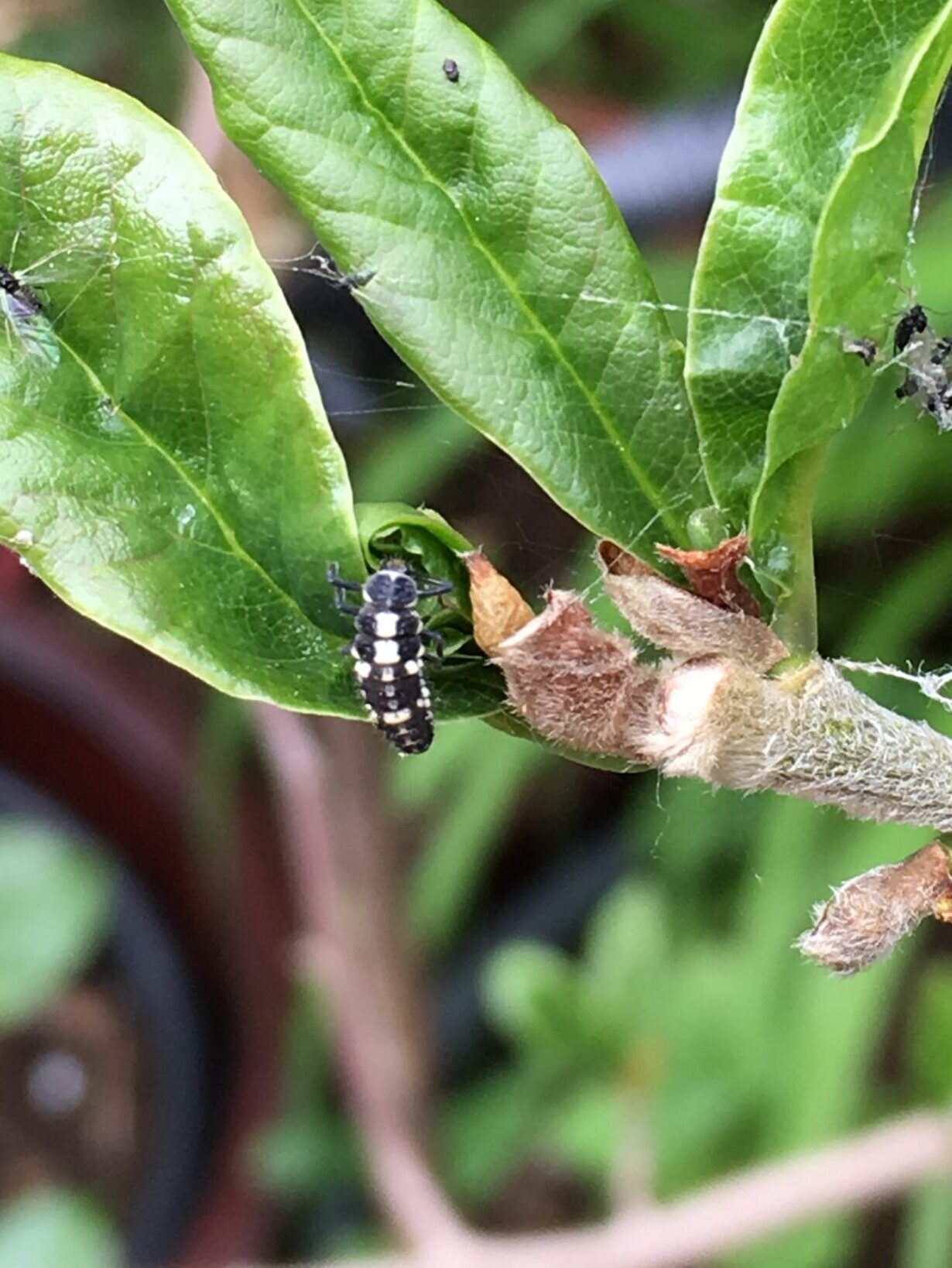
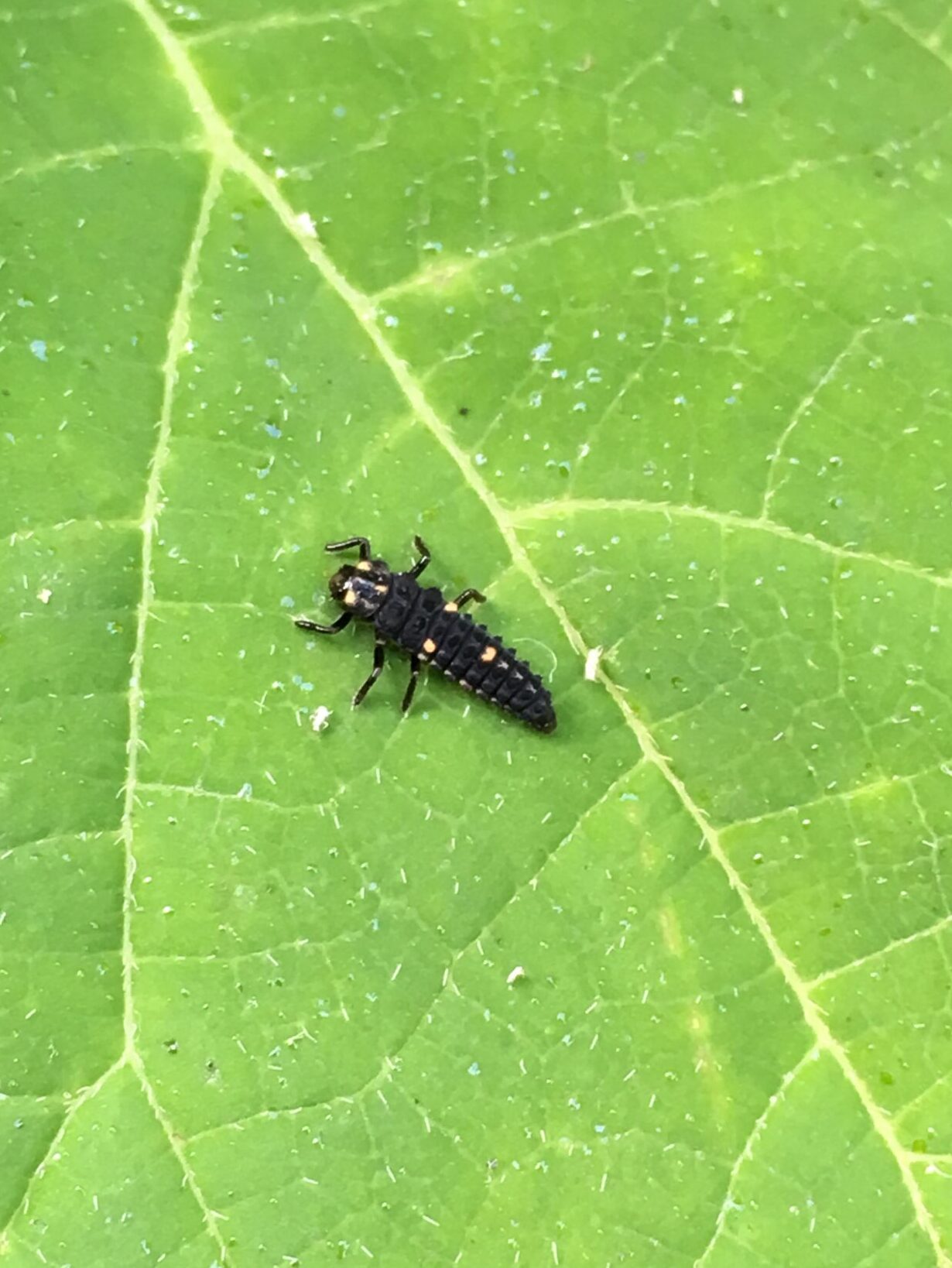
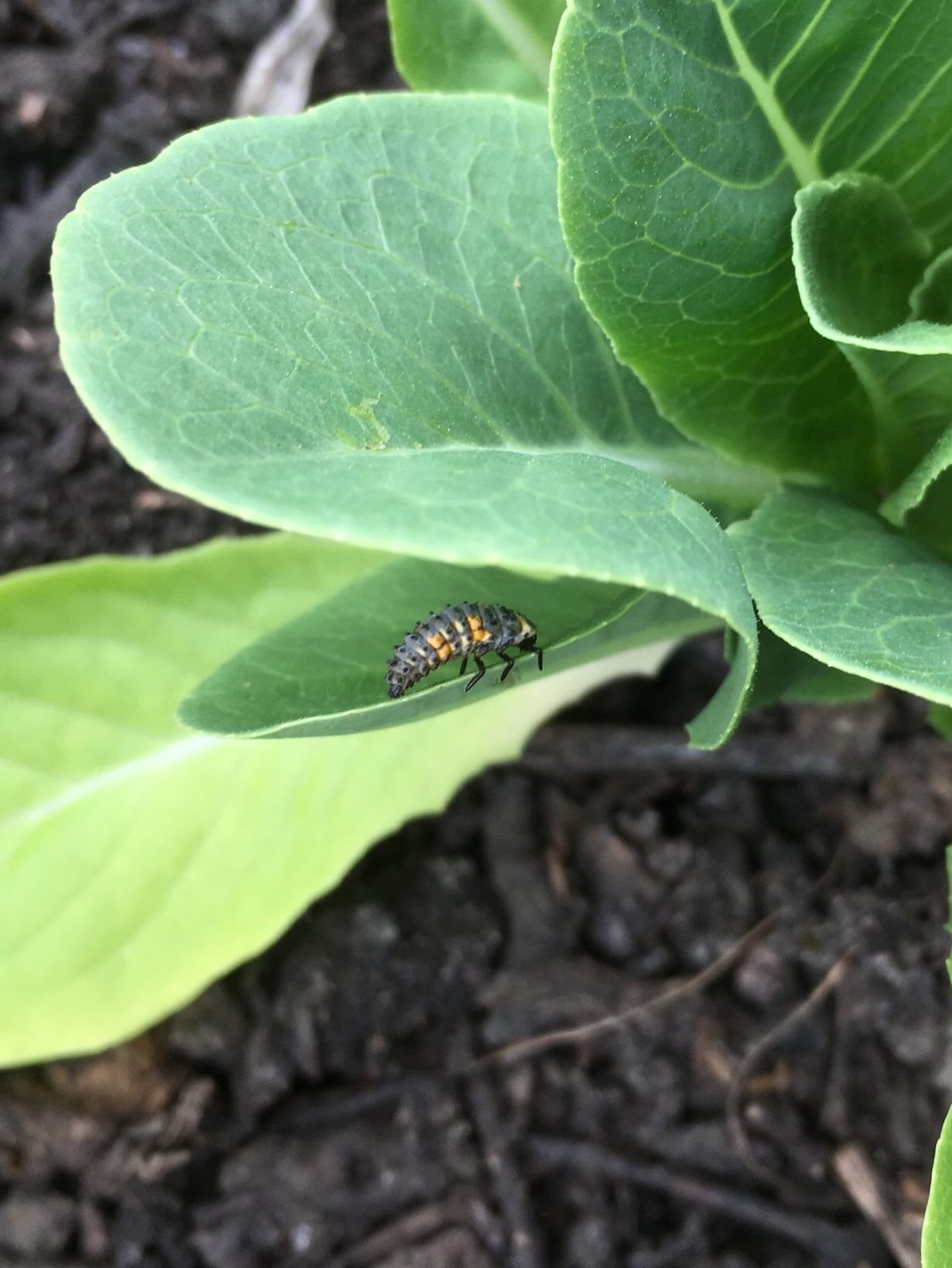
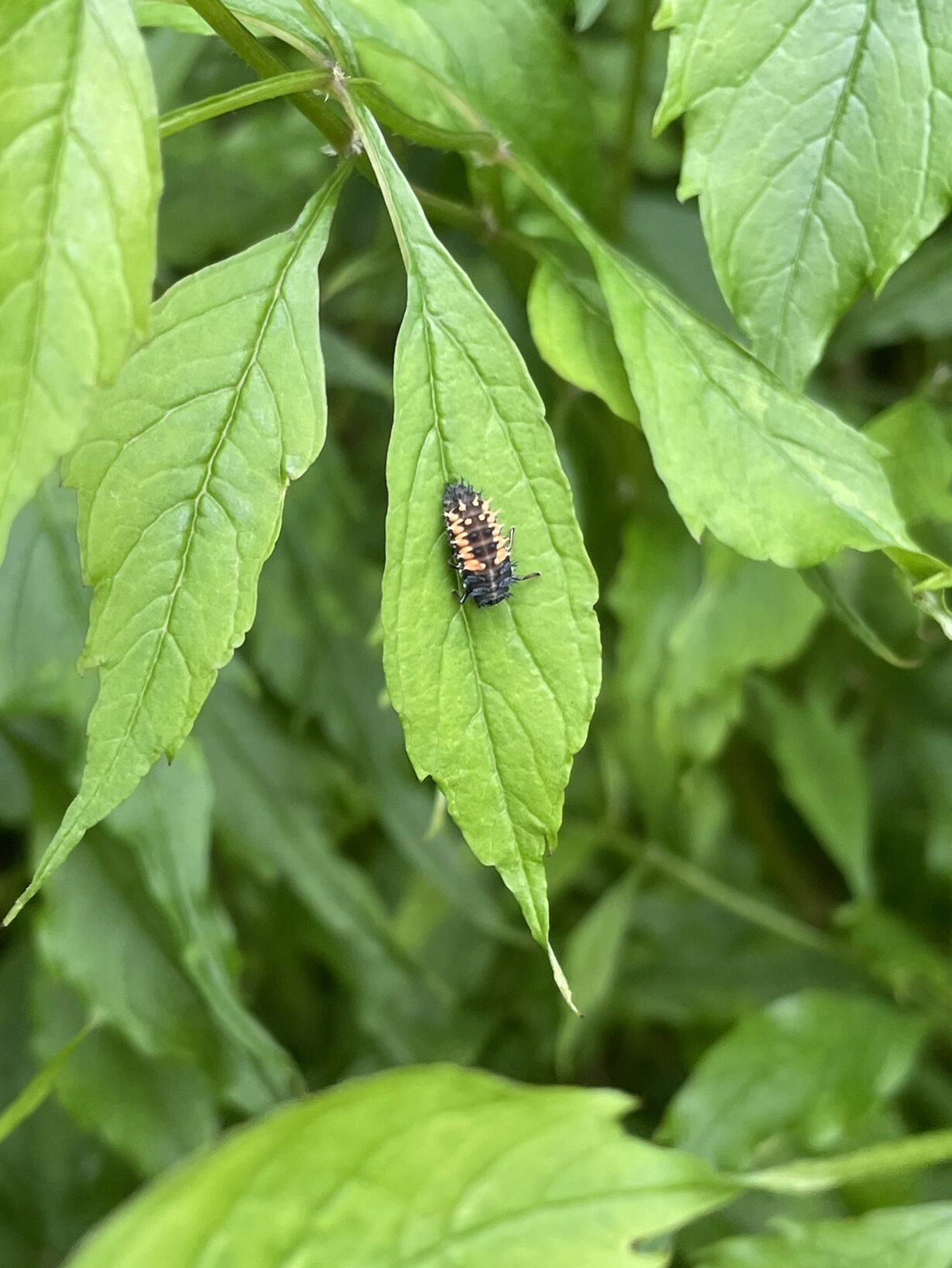
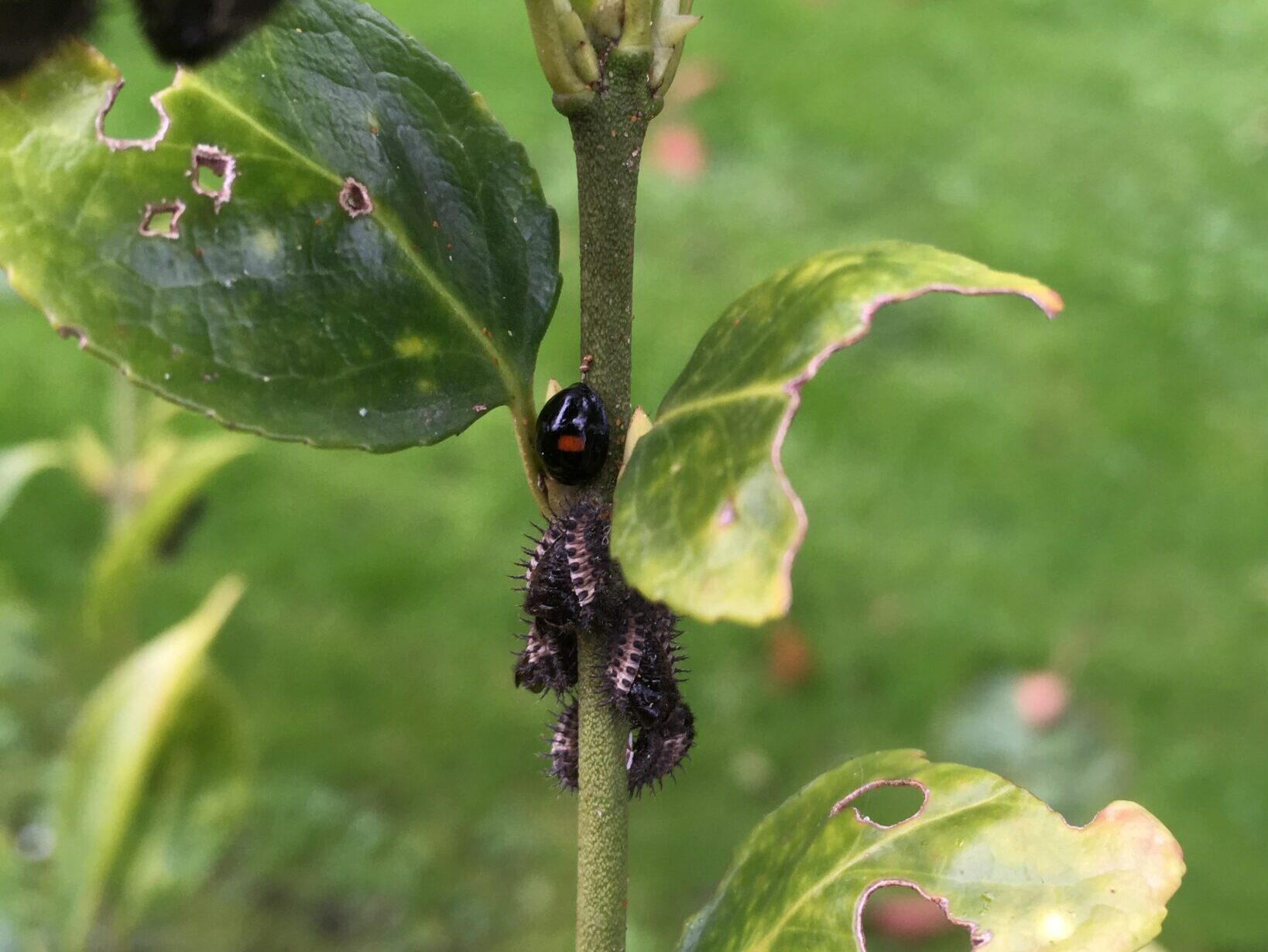
    Once they hatch from their eggs, a phenomenon I was never lucky enough to observe, the ladybird larvae are minute (they did come out of an egg that was maybe one mm in size, right?). They grow in size progressively as they feed: in fact, they go through four instars, or stages of growth. Their body shape remains the same throughout and it is quite unlike the adult bug: they look more like little dragons, black or grey with varying amounts  and patterns of colourful dots depending on the species. Some pictures below.


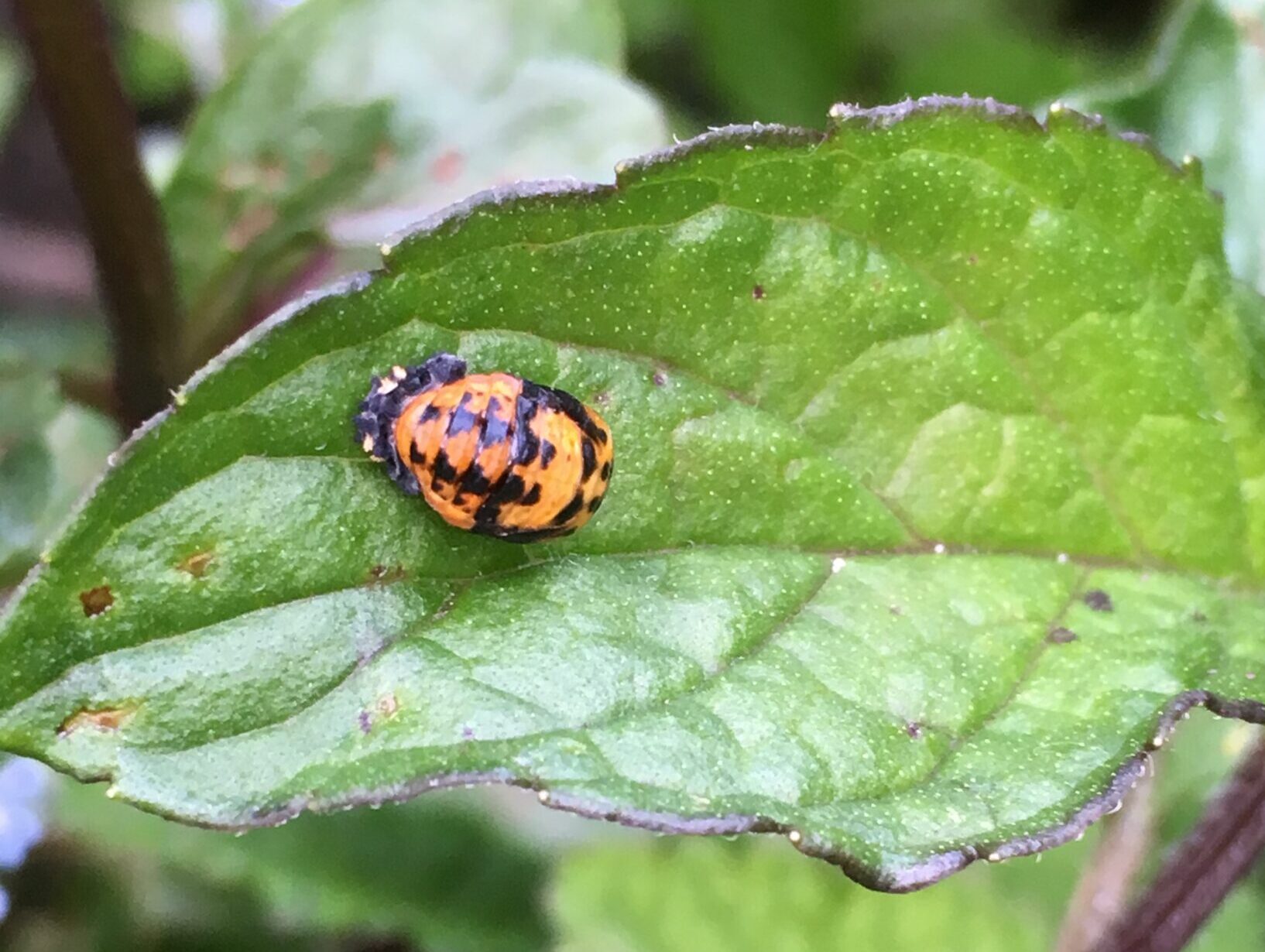
    Once big enough, the larvae find a safe place, for example in the middle of a leaf, like the last one in the pictures above, glue themselves in place, and pupate. Pictures of some pupae below.

    You can read more on the website of the UK Ladybird Survey website, my go-to place for everything ladybird.

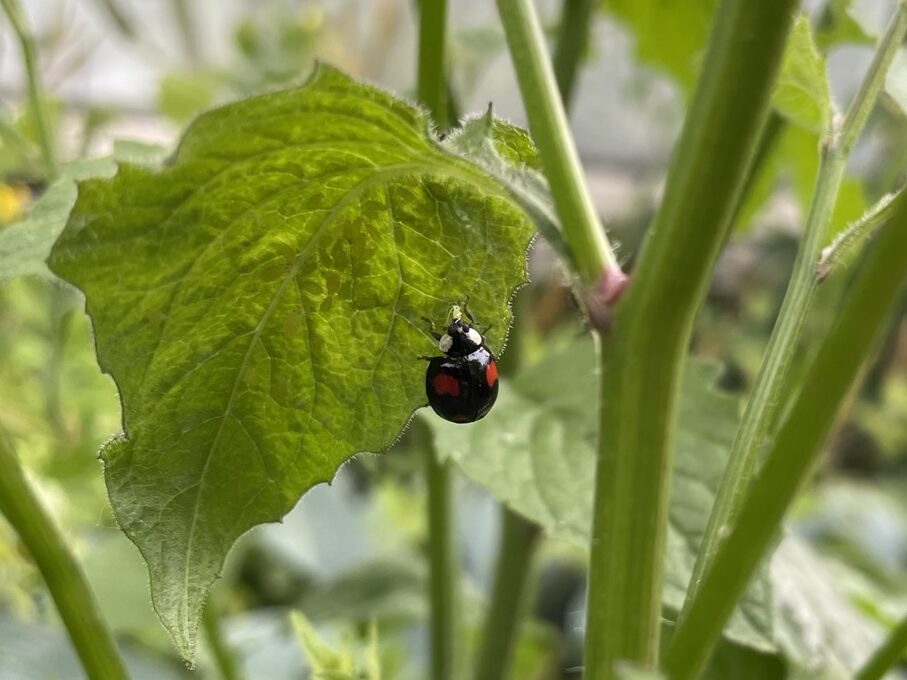
    Note that adult ladybirds eat aphids as well: here’s proof!

    Greenfly being munched on by adult ladybird


    Hoverflies (Family Syrphidae)

    The adults are pollinators, so hoverflies are all useful anyway, yet there are some that double up as predators while growing up (40% of the UK species, according to the RHS), and that cannot but be good news.

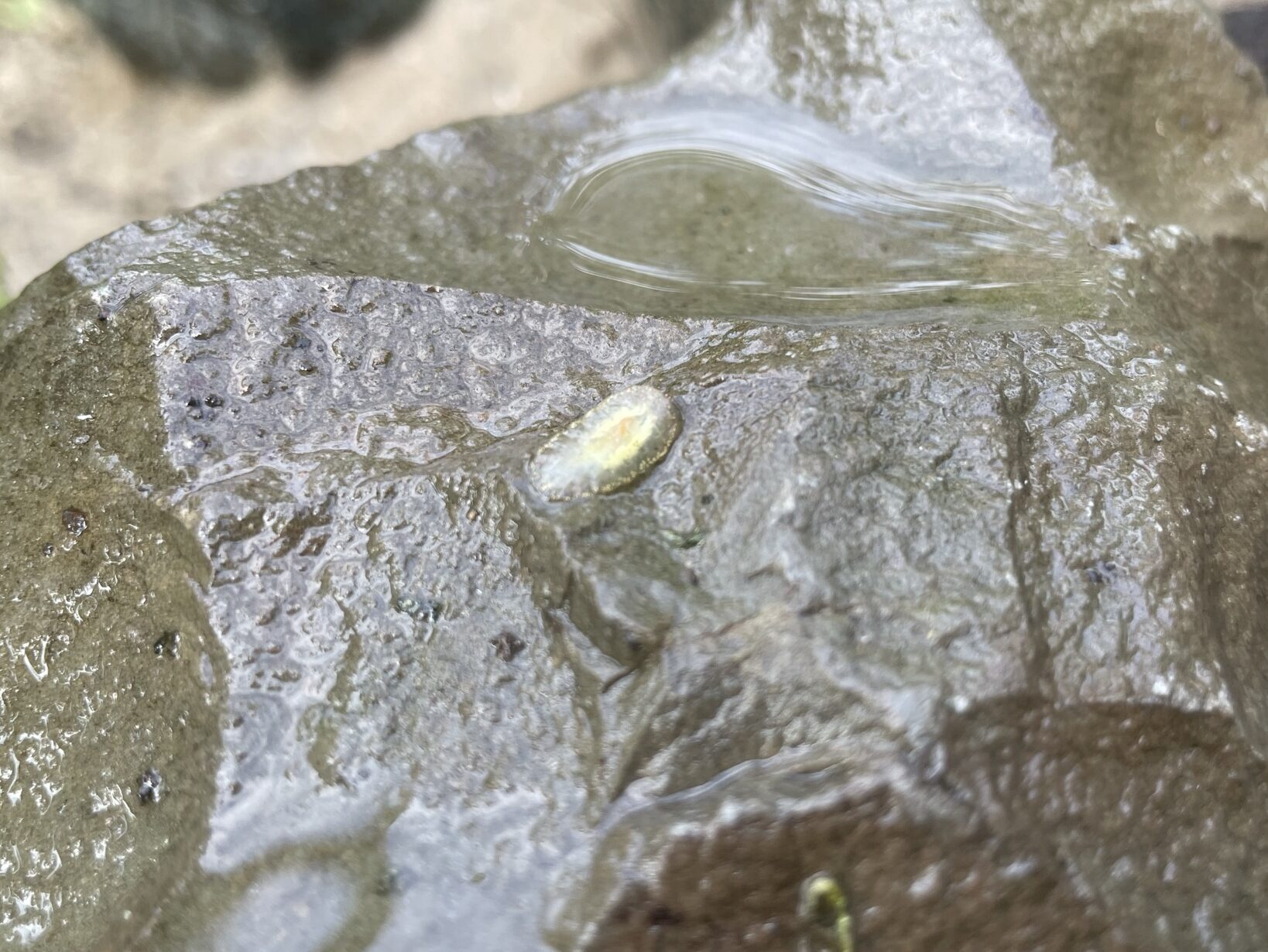
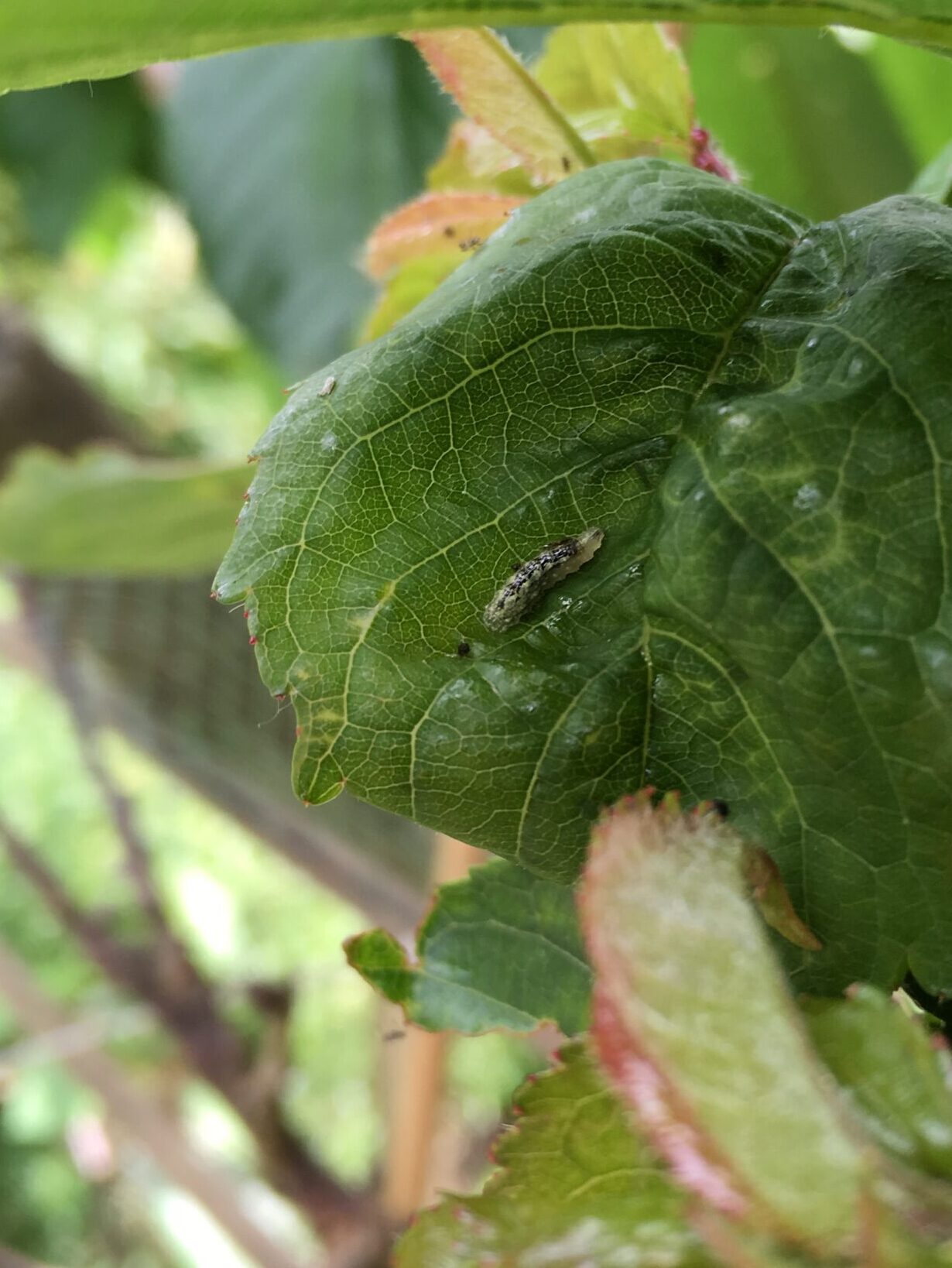
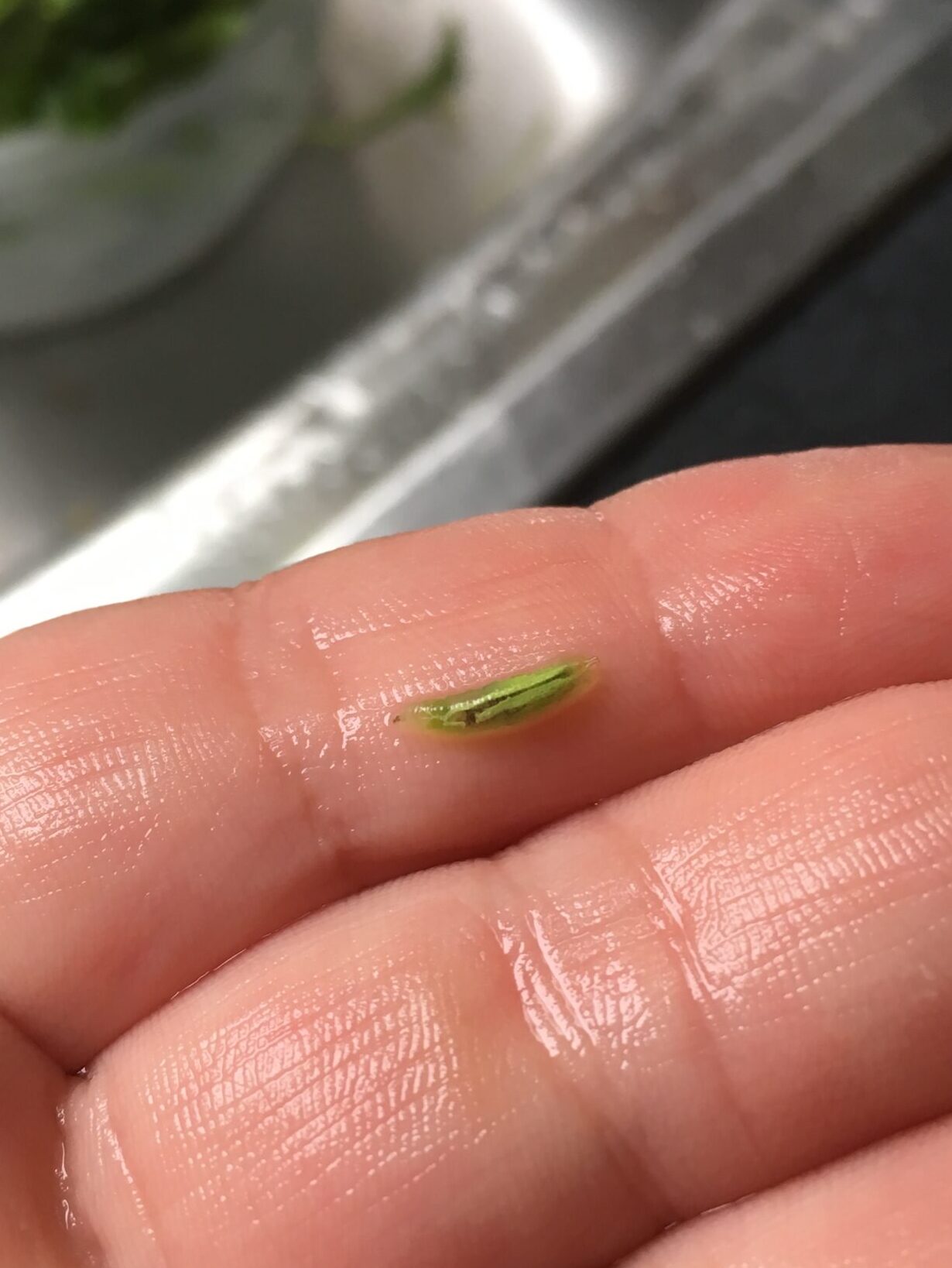
    The larvae of hoverflies are legless and also known as maggots – hoverflies are flies after all. This is to say, the next time you are tempted to kill a maggot, think twice! Maggots have different feeding strategies, but the ones I know that eat aphids do not wriggle, so definitely more likeable than your idea of a maggot. Some of them look like creatures out of the sea: their bodies are clear and you can see their innards, an easy way to recognise them!  Some sport a breathing tube out of their back. Lettuce heads are places where they tend to hang out: more than once have I rescued one from the rinsing water of my salad leaves and put it in the garden. Below some pictures of different species.

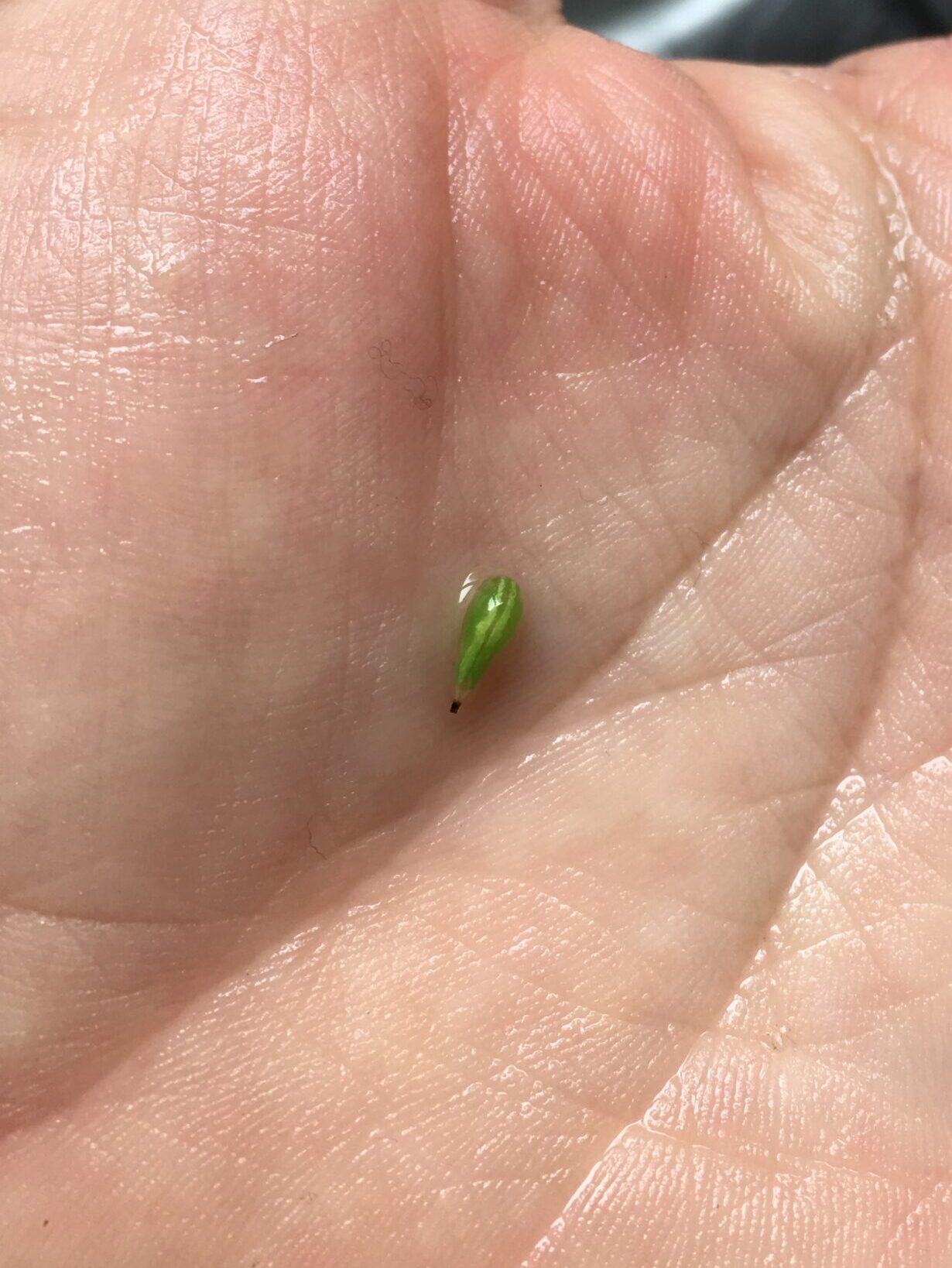
    Larvae go through three instars, then pupate. Most of the pupae look like drops, glued by the tip onto some plant (which could well be a lettuce leaf).

    It seems difficult to find more pictures of all stages of the lifecycle from authoritative sources, but I hope you get enough of an idea.

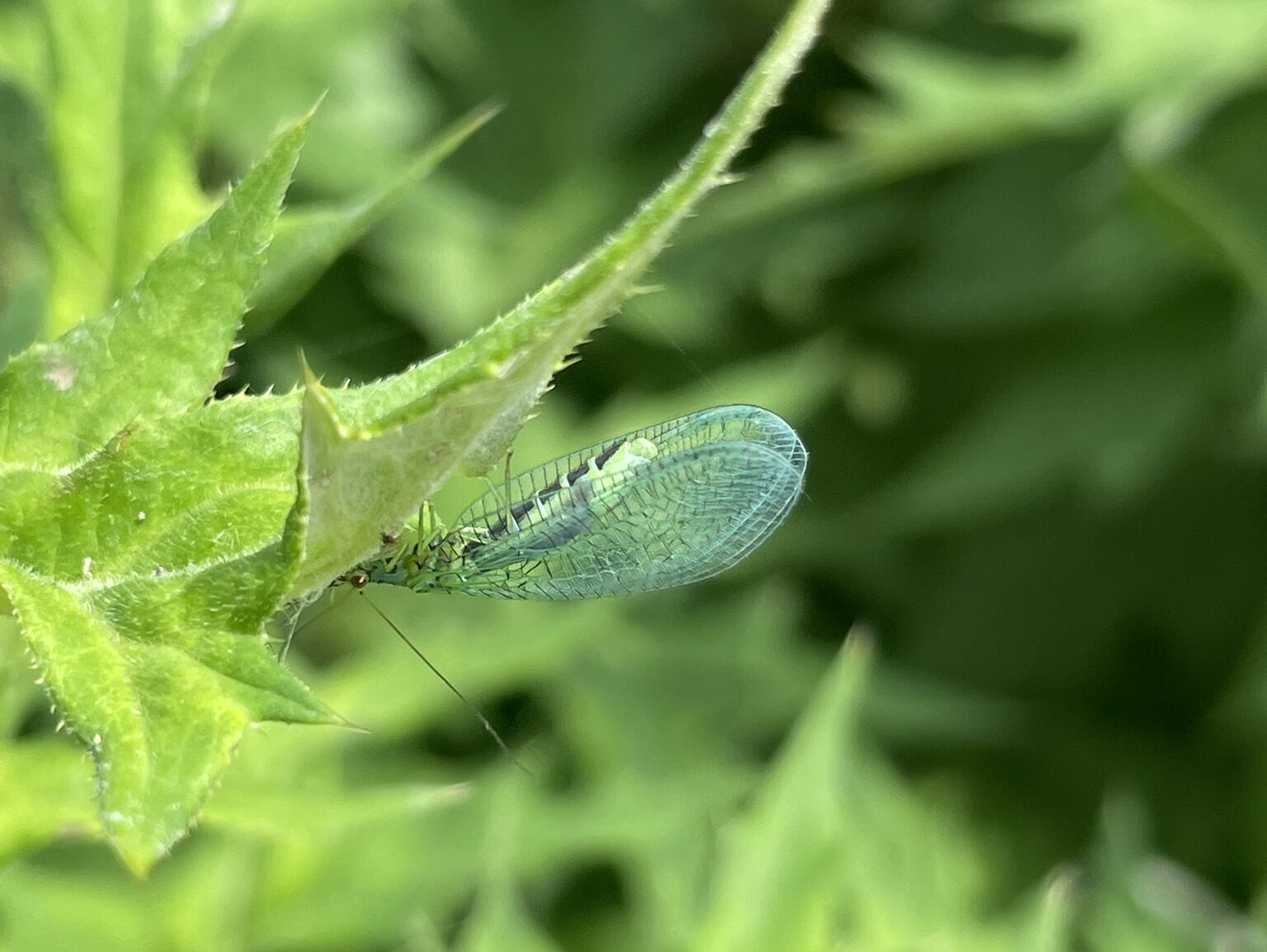
    Lacewings (Family Chrysopidae)

    I have just read that, as adults, these bugs have ears* on their forewings, so that is probably why they are so difficult to take pictures of!
    (*tympanal organs, that is).

    In general, I find these insects quite intriguing, maybe because I am not so familiar with them. Apparently the eggs are laid in groups, each on top of a silky thread attached to a leaf. I would love to see that. A silky coccoon is also where the larva goes to pupate after going through three instars.

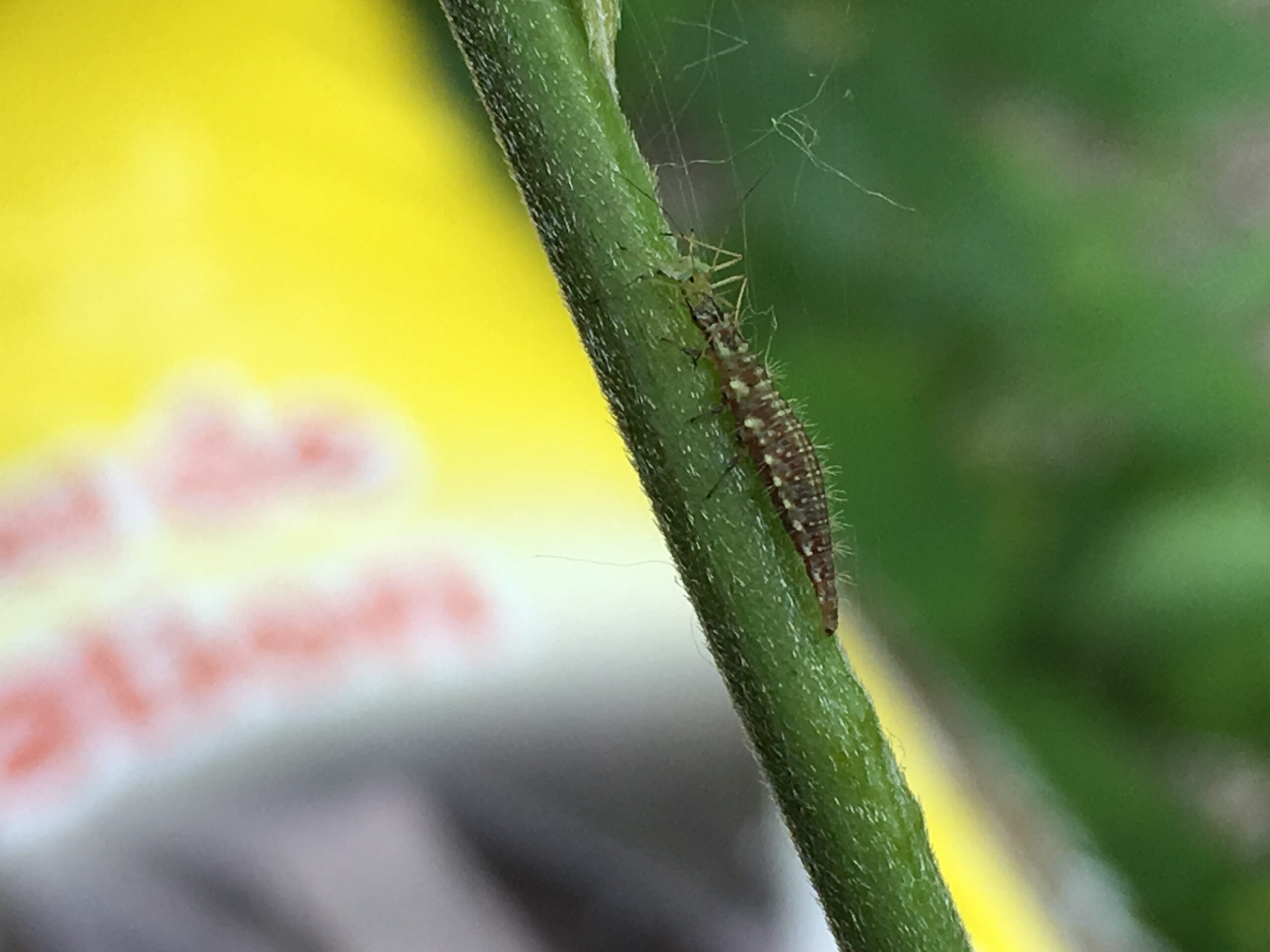
    The larvae themselves are the true predators: little brown ‘crocodiles’ with mighty mandibles, which leave you in no doubt what their intentions are. Sometimes they cover themselves in aphid detritus for extra stealth.

    A lacewing larva with a greenfly in between her mandibles.

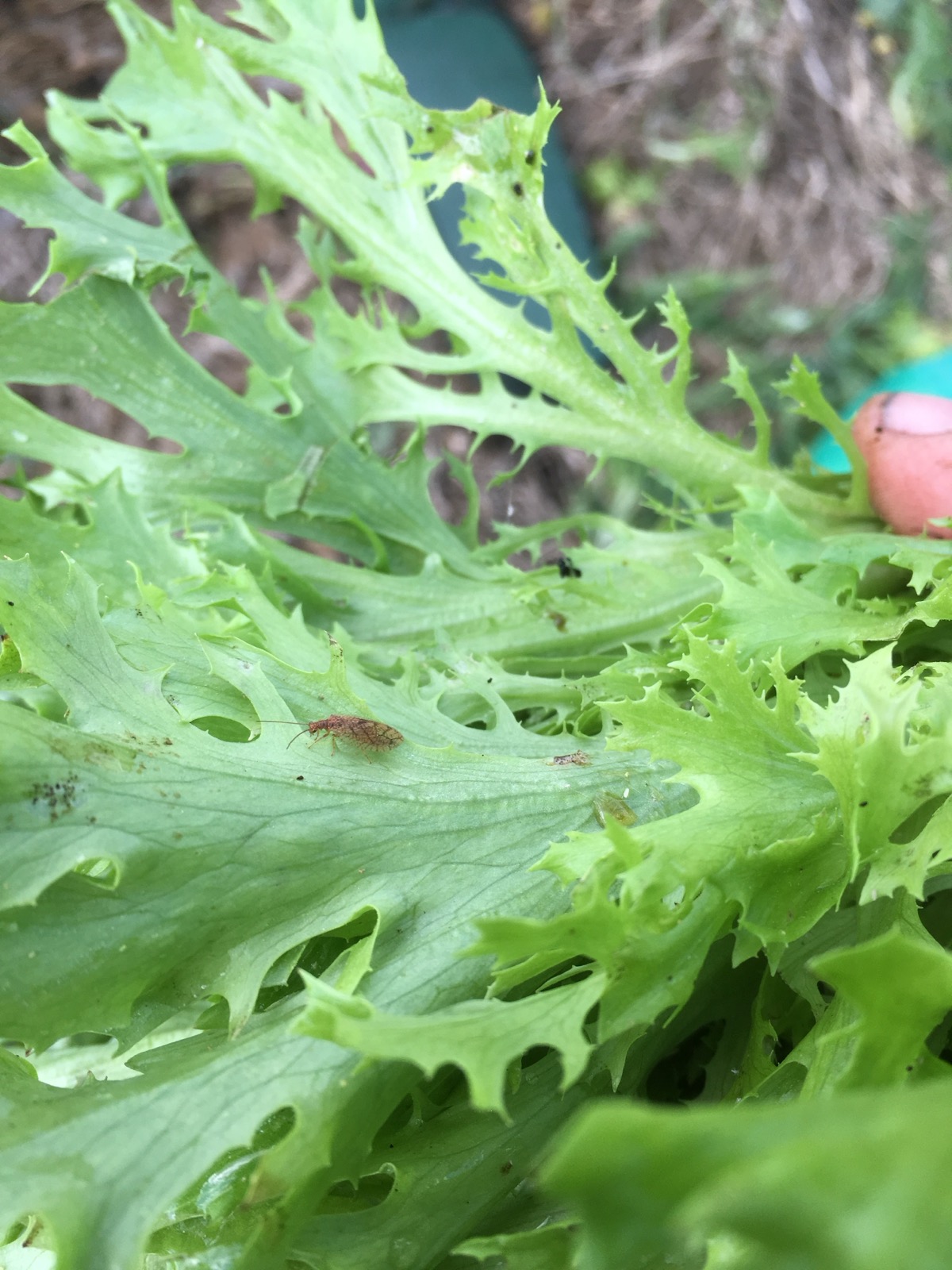
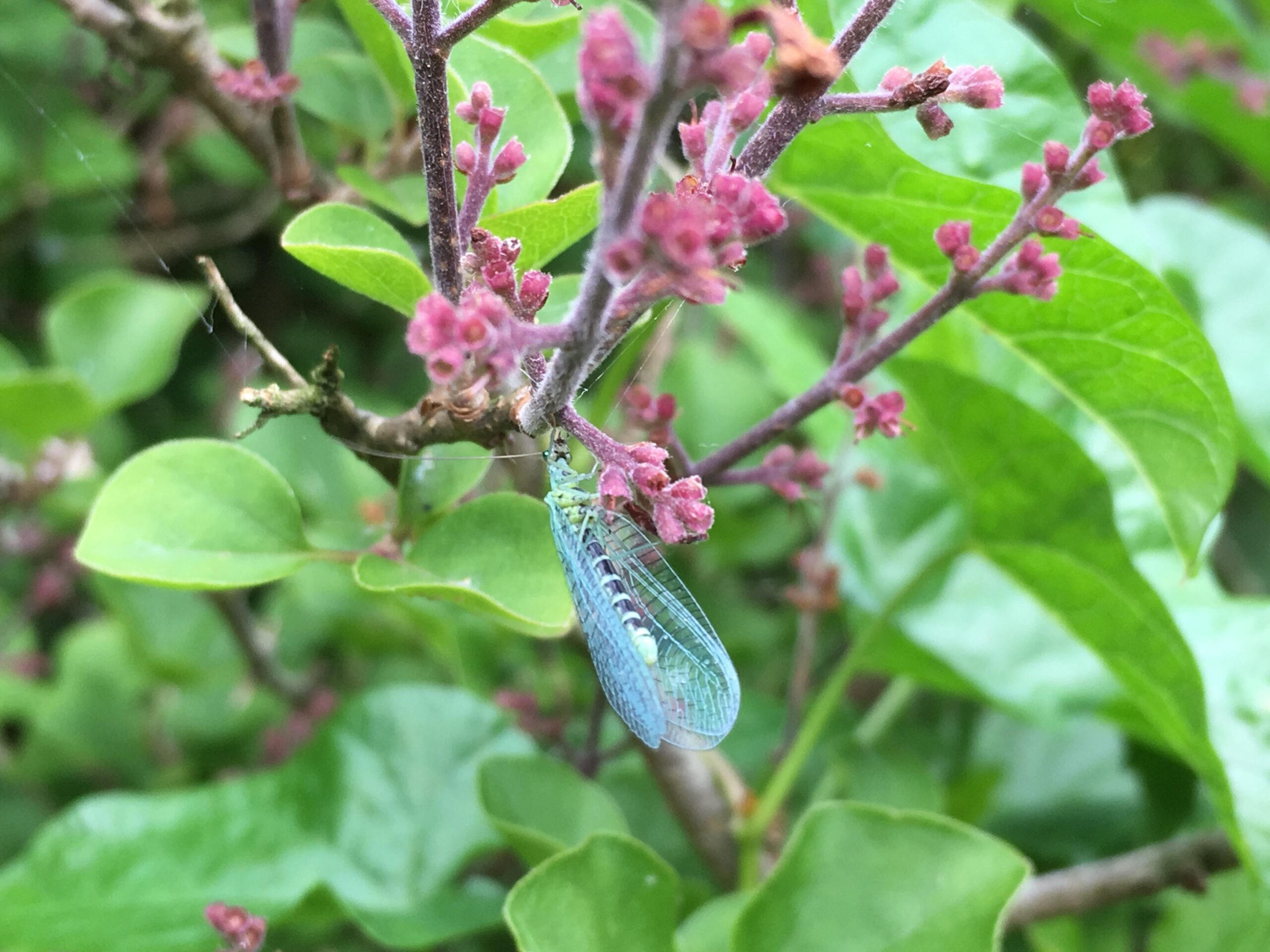
    Adults, on the other hand, generally feed on nectar, pollen and honeydew (the irony!), but they do not appear to disdain the odd critter. In case you are not familiar with this more elusive bug, here are a couple imago pictures as well: one brown and one green specimen.


    Parasitoid wasps (Aphidius, family Braconidae; Aphelinidae)

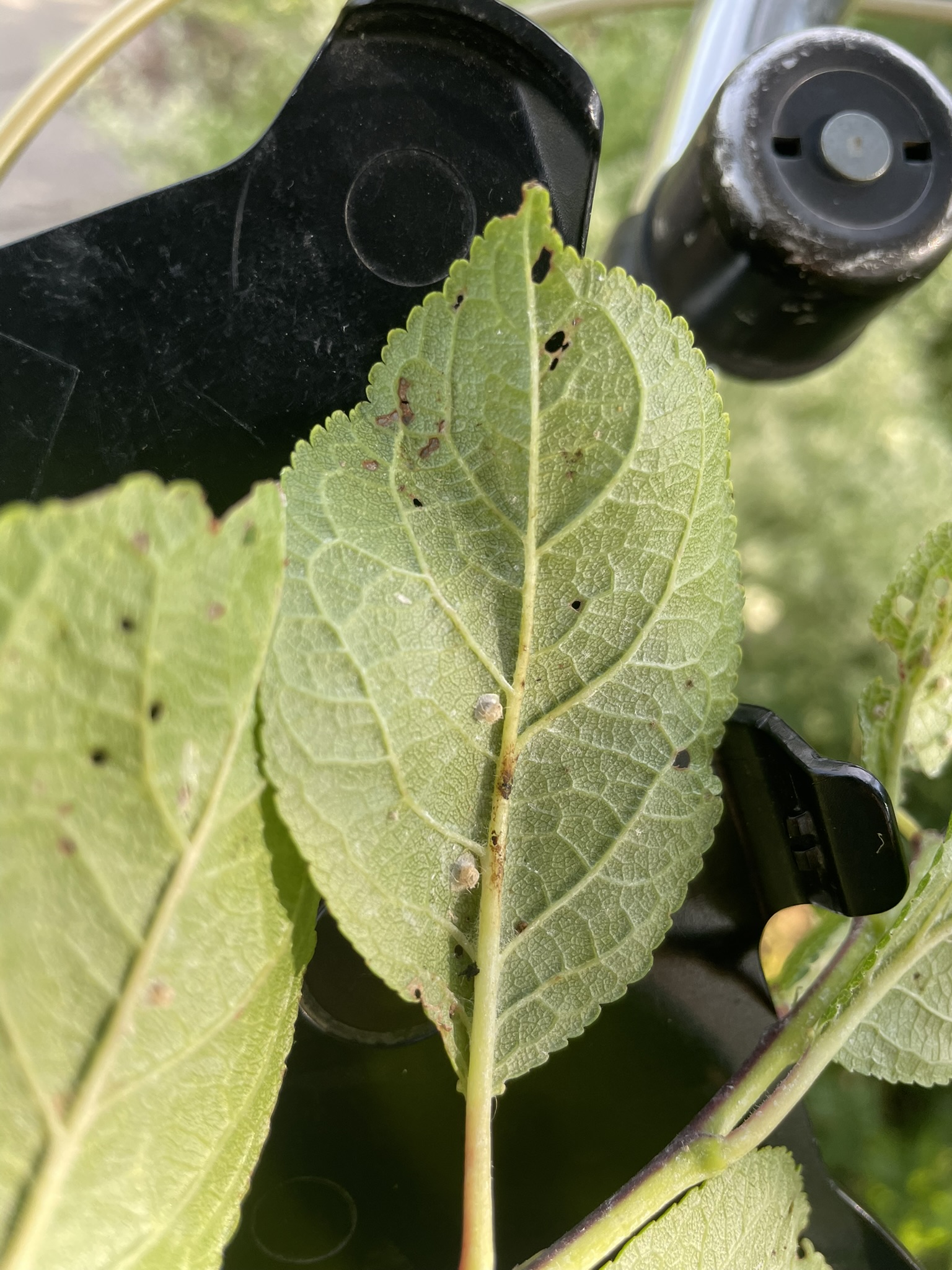
    Last but not least the parasitoid wasps, that is: tiny wasps whose larvae develop inside of and feed on aphids, stuck in place and mummified: “crusty, puffy, smooth” mummies, as they are described on the University of California IPM website. I read on the University of Maryland website that wasps in the Aphidius genus make golden mummies, while the Aphelinids cause aphids to become dark, so I seem to have mainly the first in my garden.

    The Aphidius babies live all their lives inside the mummified aphids; some pupate inside, some underneath it, which is I think what migh cause that webbing under the mummies that I have photographed. It is not clear to me if there are species in either family whose larvae live outside the mummies, but in any case the presence of a mummy is indication that there’s predators around: hurray!


  • When pear shoots go black

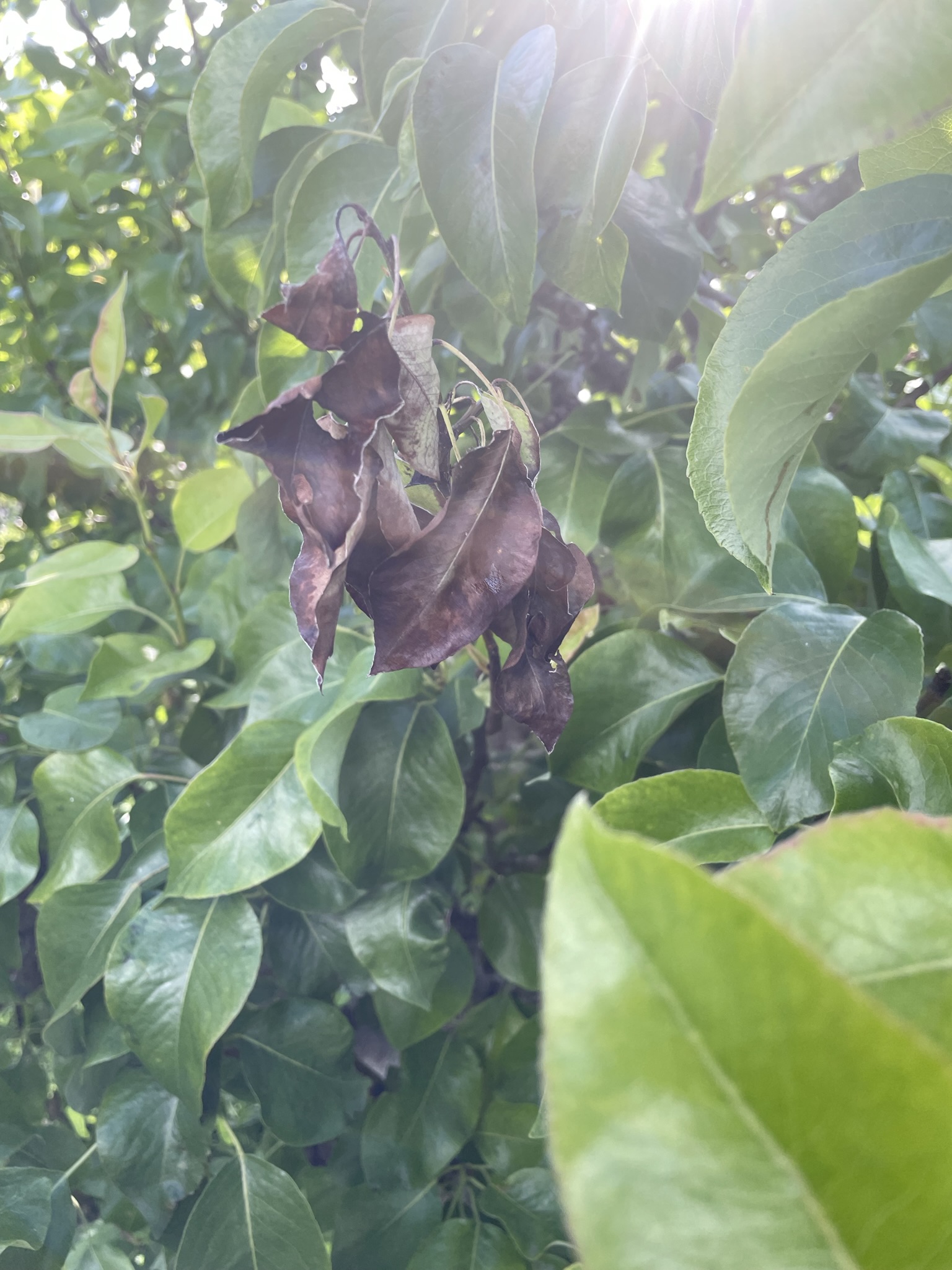
    After coming out green and fresh, full of life, pear shoots can suddenly turn black and droopy. The sight is quite dramatic but can really signify anything from harmless to “quick, remove that and burn it!”. Below are two of the most frequent reasons, starting with the harmless one.

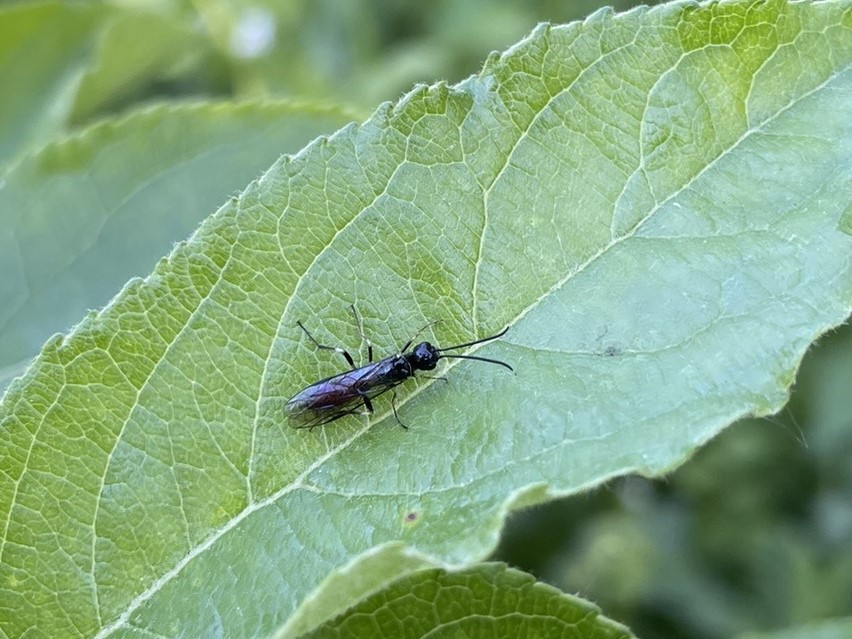
    Pear shoot sawfly (Janus compressus)

    Janus compressus, the pear shoot sawfly

    Not to be confused with the pear and cherry slugworm (Caliroa cerasi) about which a lot is to be found on the web (see ie the RHS website), this bug appears to be a more recent concern for English-speaking orchardists.

     
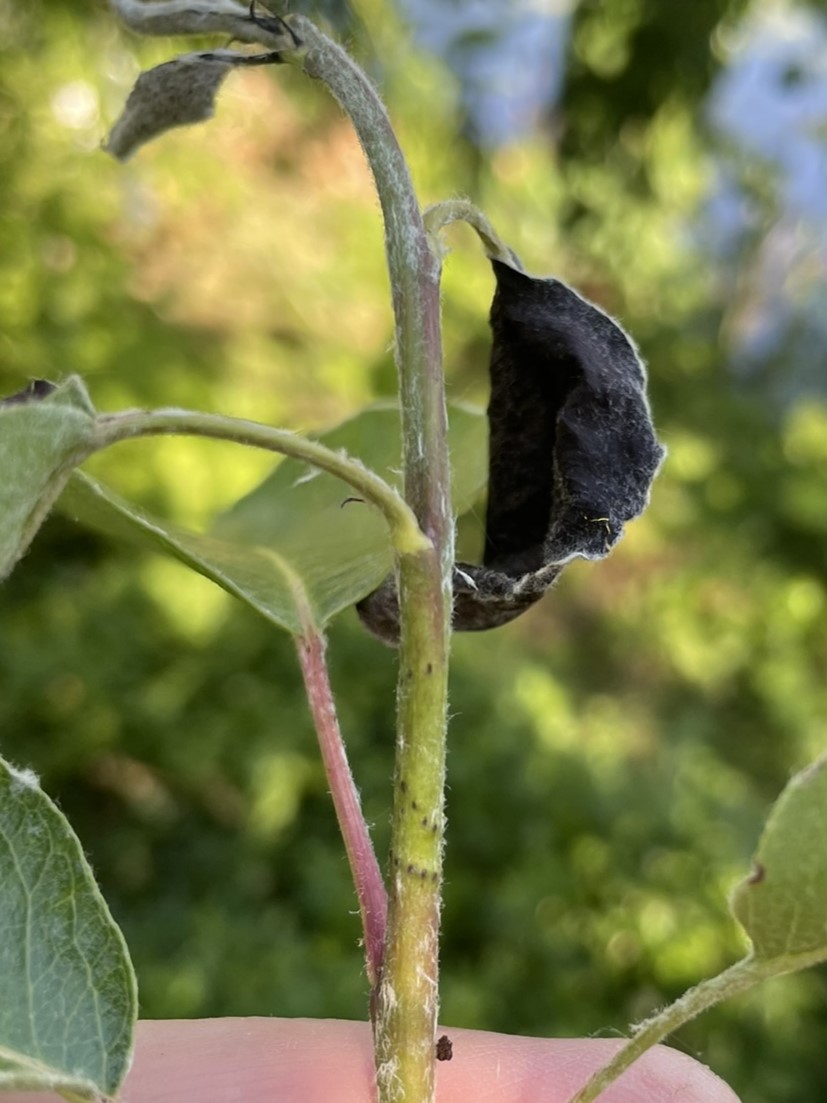
    Wilted pear shoot with holes in a spiral pattern


    While unlikely to become a problem in a healthy, biodiverse orchard, this insect inflicts damage on the new shoots that causes them to turn black (or dark brown) and droopy to resemble a shepherd’s crook, which is also the most famous symptom of the dreaded fireblight (see below). There is however an easy tell tale sign that can put your mind at rest: at the base of the drooping and wilting shoots there is a series of spirally arranged punctures, where the female laid her egg.

    An open source paper* describes the life cycle of this bug:

    • Adults emerge around the end of April and fly for a long period of time, up until June.
    • The female lays an egg in a shoot, or sometimes in a pear that is just about forming, which turns black and dies (also happening with fireblight).
    • The egg takes about two weeks to hatch and the larva lives its life in the shoot, eating it from the inside.
    • In September, it makes a hibernation chamber in situ for its winter sleep, then in March it starts pupating. The cycle starts again.

    I have often wondered why, when studying horticulture, I was forced to learn spraying methods instead of the lifecycle of bugs, which is obviously the way to empower someone to develop suitable management strategies…


    * Kovačić Jošić, Dragana & Almaši, Radmila & Trkulja, Vojislav. (2017). Contribution to knowledge of the morphology and of the biology of pear shoot sawfly (Janus compressus Fabricius)

    Fireblight (Erwinia amylovora)

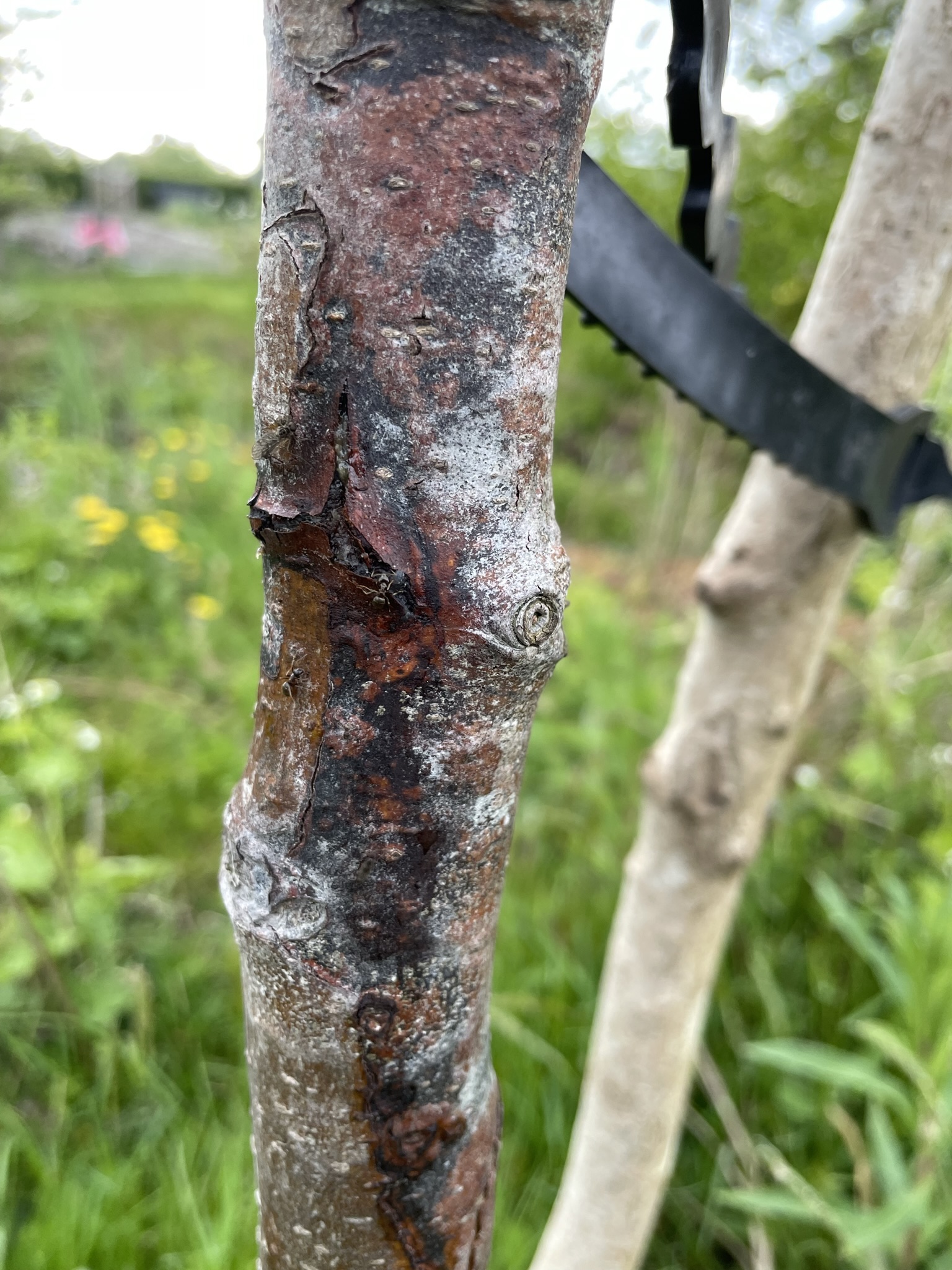
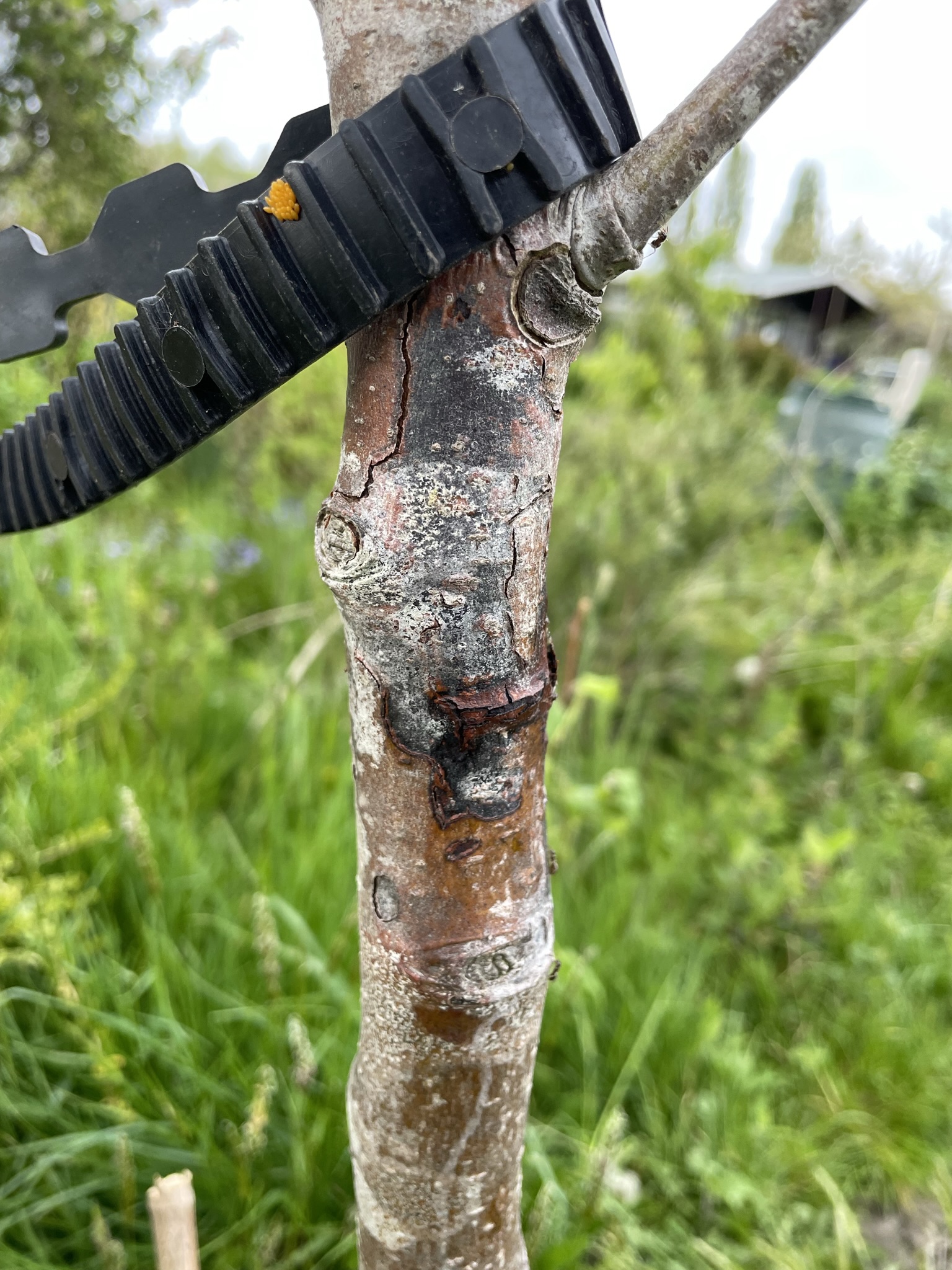
    I had a very unpleasant experience with this disease. In April 2022 a black bleeding lesion appeared midway through the trunk of one of my pears. I won’t lie: I did panic and removed and disposed of the little tree there and then. 

    Maybe I could have saved the plant. Anyway, that’s the benefit of hindsight. I spent that whole summer obsessively checking all pears and my apples for infection while researching the disease. I would terrified it would spread and destroy my beloved collection. I got my neighbours to remove a young pear tree they had got for free during the Covid lockdown, a sickly plant that was likely responsible for introducing the bacterium on site. I also stopped grafting apples on M9/26 rootstocks, in favour of the less susceptible M7.  

    Fireblight is so called because bad infestations can make the plant look like it’s been through a blaze. This bacterium hails from the US, so the best ID photos and management information are to be found on the websites of US universities’ agricultural extensions (ie. Cornell which provides excellent life cycle graphic, or Purdue). That information is meant for commercial growers, so they are quite liberal with their advice on chemical treatments. The RHS suggests there are no chemical treatments available (to the hobby grower), which is definitely the more sustainable approach too. Bacteria are killed with antibiotics, but we do know that extensive use of those tends to let ‘superbugs’ emerge, like MRSA.

    E. amylovora is a disease of the Rosaceae family more generally, even if it affects mainly pears, apples and some ornamentals like Photinia and Pyracantha (I did briefly write about it when I first encountered the disease at Kew). There is some disagreement whether it might affect stone fruits, like plums. The reason why this disease is particularly nasty is its ability to travel inside the plant – spread systemically is the technical term for that.

    The bacterium survives in inactive overwintering cankers, like the one on my little tree, which I had not spotted before. When temperatures rise, from spring onward, it awakens, multiplies and, given the right humidity, start to ooze from the cankers. Oozing is not common occurrence in cankers of pear and apple: it did make an impression on me.

    Oozing cankerous lesion with ants
    Black and cracked canker area

    That ooze (clear/white maturing to amber) is attractive to insects, which spread it around. You can see ants in the pictures above. The disease is also spread locally by splashes, be it rain or watering (ie sprinklers).

    From this early source the disease ends up in the flowers, through which it may enter young stems; in countries where the flowering seasons is quite cold, the risk is mainly associated with secondary or late flowering, aka rat tail bloom, particularly where hawthorn is also present. Natural openings in young shoots, wounds and damaged tissue (ie frost and insect damage) also provide entry points, and the cycle can continue – given the right conditions – until autumn.

    Affected shoot, dead leaves clinging to it
    Possibly affected fruitlets

    Sappy, fast growth is particularly susceptible to the disease. The advice for its cultural management is therefore to:

    • prune moderately, so as not to cause too many water shoots;
    • prune in the winter and dry weather when the likelihood of infection is minimal;
    • feed judiciously, avoiding too much nitrogen.

    Although the infection seems often to stop within the new shoots, the spread of fireblight inside a mature plant can be rather fast (and ahead of symptoms) in the right conditions. Therefore, when removing any canker on mature wood in the growing season, it is advised to do it with ample margin, ie 30-60 cm lower than the last visible symptom. As pruning wounds remain, rather unfortunately, a possible infection site until they heal, a suggestion is to leave a snag when pruning a branch, rather than properly removing it all the way down at the collar. The snag can then be cut back safely in the winter. 

  • Peach leaf curl (Taphrina deformans)

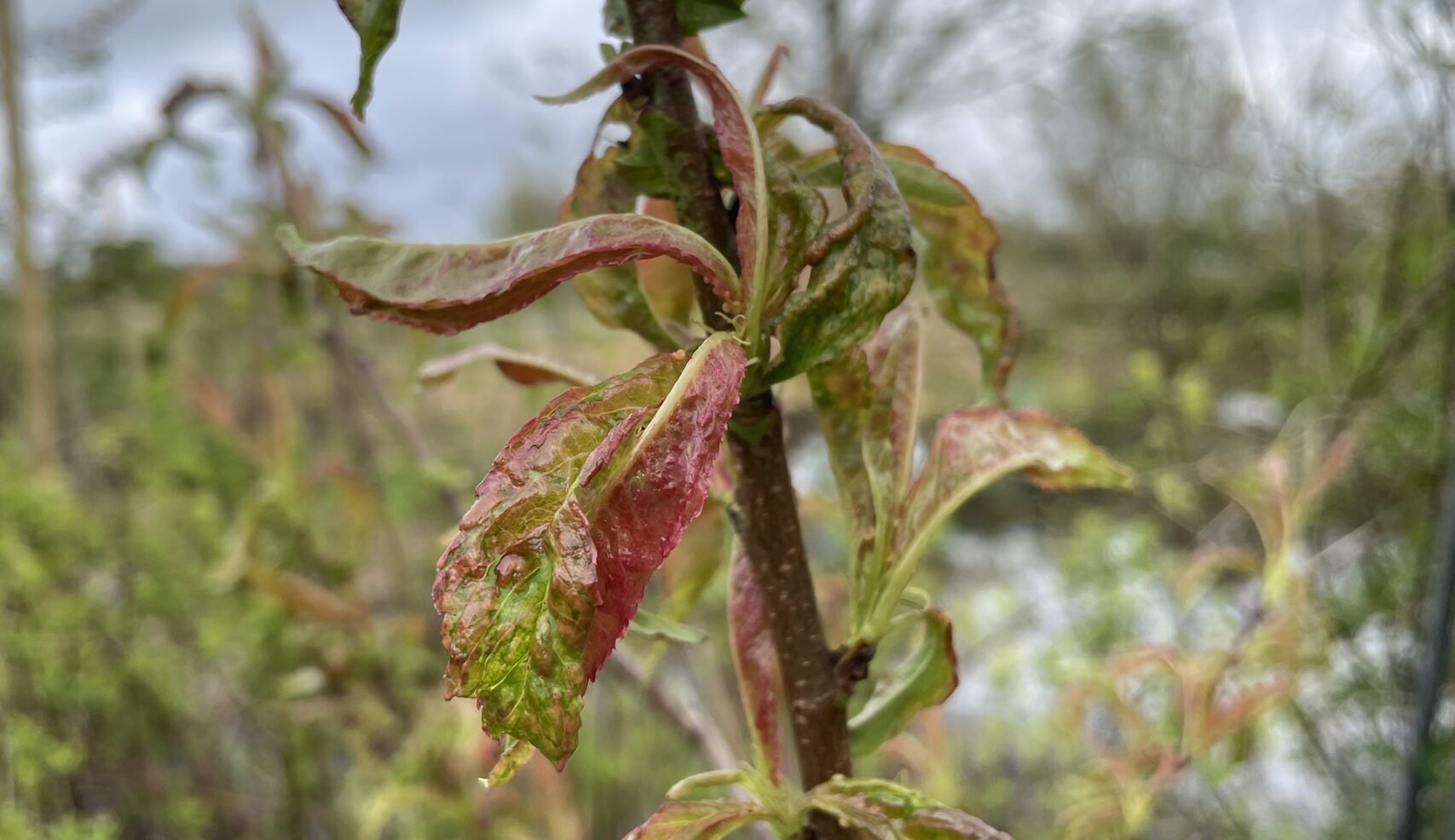
    Another plant species that is commonly known to suffer from red, curled up leaves in the spring is peach.
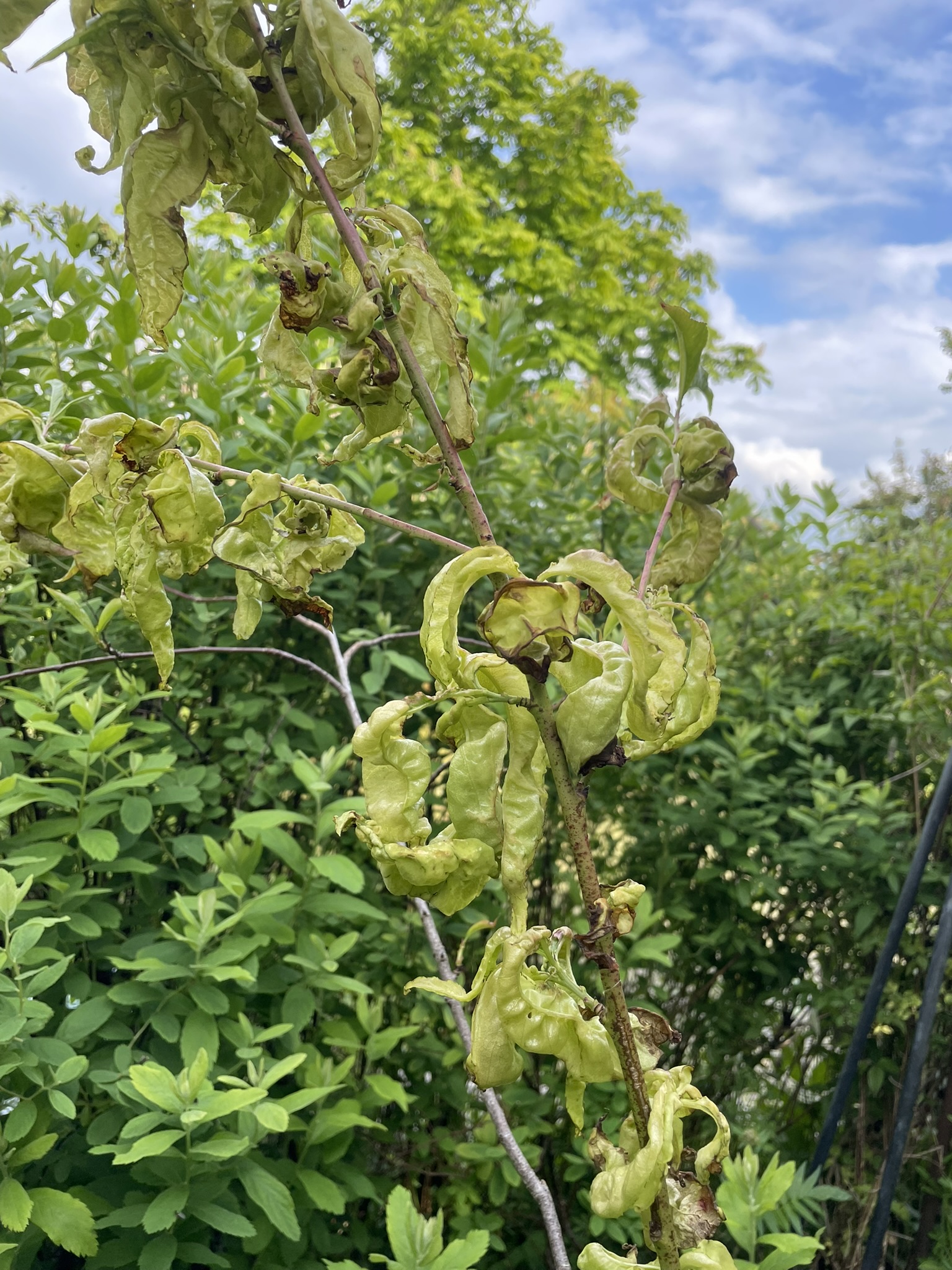
    The curling up is caused by a fungus, Taphrina deformans. The fungus, which favours cool and wet weather, causes leaves to pucker; the blisters are often red and rather showy, just before the fungus starts producing spores, which gives the affected leaves a sickly yellowish look. Although a handful of affected leaves can be removed and do not cause plenty of damage, if left untreated the fungus comes back year after year, having survived on the plant surface and on plant debris, and weakens the plant considerably.

    Peach leaf curl on a Saturn peach

    This is the reason why peaches and nectarines tend to be grown under glass, or – like they did at RHS Wisley – get covered from November to May. I did write about helping with putting up lean-to shelters to protect the trees a few years ago.

    If planting outdoors, one would ideally choose a resistant cultivar.

    I made an experiment growing peaches and nectarines from the stones of some fruits I liked, as apricots and peaches come true to seed, or at least very close.

    Saturn peach after repeated infections


    The Saturn peach I grew is very susceptible to leaf curl. The first couple of years I treated the blisters with an infusion of garlic with a few drops of added tee tree oil: this desiccates the blisters and the leaves grow on healthily, provided the weather stays dry enough. It is however only feasible for minor infections as you don’t want an antibacterial/fungicide sprayed extensively, for how ‘natural’ it might be. I had hoped the tree might grew out of it but it didn’t, and despite a handful of flowers, it has never fruited.


    Having grown two nectarine plants from seed that seem immune to the fungus, I have now decided I will get rid of the peach as it’s not worth it.

    You can read more on T. deformans on the RHS, Missouri Botanical garden (which helpfully mentions that occasionally it may be aphids that cause leaves to pucker: look under the leaves!) and UC IPM websites (offering a detailed lifecycle).

  • Pear pests and diseases

    One of the joys of horticulture is the continuous learning process you go through while caring for and observing your plants through the seasons, year after year.

    One of the frustrations is that we seem to know rather less than we think we do about plants and the environment: it is sometimes difficult to be sure what you are looking at, and the advice you receive from all and sundry is frequently contradictory. My rule of thumb has now become: the more assertive and vocal someone is about their opinion, the more suspicious you have to be about what they say. I mean, just double (or triple) check it. After all, only science can give you a definitive answer: a lab for diseases, and entomologist for pests.

    Besides, at times more than one pest, or a combination of pests, diseases and disorders can simultaneously affect a (poor!) plant, especially if it is weakened by poor growing conditions (drought, wet feet, poor soil, etc) or if – as a variety – it is particularly susceptible.

    Pears have been at the centre of my attention in the last few years, what with getting more of them and having to fend off whatever enemies they seemed to be under attack from without extensive knowledge, so I’ll talk a little about them.

    Spoiler alert: in most cases nothing needs doing. We just need to unlearn the involuntary reflex that pushes us to reach for the chemicals’ cabinet. In a biodiverse orchard where there are enough predators, and where plants have enough food, water, light and air, most problems sort themselves out. Sometimes judicious pruning at the right moment can help.

    Pear blister mite (Eriophyes pyri)

    Blistered and blackened pear leaves


    I’ll introduce you here to pear ‘Beurré Hardy’. I received it as a gift by a loved one, as a result I am quite attached to it.

    The summer I was getting ready to leave the UK, it was quite badly affected by pear blister mite (Eriophyes pyri), so instead of bringing the plant with me, I propagated it from a healthy shoot in the summer, before the mites started leaving the old leaves on which they were feeding and went on to look for overwintering shelter in the bud scales (see lifecycle on RHS website).

    The new plant grew quite vigorously and healthily on in its pot for a year .


    Curled up leaves, pink with blisters


    I planted it out in the winter, then all the leaves that emerged the following spring were pink with blisters and curled up. It turns out some pear cultivars are more susceptible to the mite. ‘Doyenne de Comice’ is a known one, but it does appear – from my own conversations with other owners of ‘Beurré Hardy’ trees – that this cultivar is another one.


    My drastic decision was to cut the lot back to a branch as close as possible to the grafting site to get rid of all the bugs. Luckily, my little tree took it in its stride and is now thriving. It gave its first few pears last year and there are quite a few this year too. All’s well that ends well.

    Pear leaf midge (Desineura piry)

    While I was researching this post, however, I found out there is another pest that causes curled up, pink leaves: the pear leaf midge (Desineura piry), which, quite appropriately for the case at hand, is described as “Important on nursery or young trees during establishment”.

    My new information came from a rather lovely guide to the pear ecosystem by HDC called a “Crop walkers’ guide” (2014). I suggest that you download it if you are interested in pears, as it lists quite conveniently not only pests and diseases but also the predators that deal with them. It is a bit thin on details, so I looked around further and noticed that Oregon State mentions that the curling is mostly to be noticed in the summer, so my little tree was likely not affected by the midge after all.


    In any case, armed with my new knowledge, the next time I see curled leaves on pear I will try and have a closer look to investigate what the problem might be. The midge, unlike the mite, is visible to the naked eye.

    More detail pictures of both E. pyri and D. pyri are available on another great resource, the Plant Parasites of Europe website.


  • A new phase: mission statement and privacy

    It’s been a long time since I last wrote a blog post of my own.

    This blog started off as a way to share my enthusiasm as I took my first steps in the world of allotment growing (Orto di Casa Cecconi means: the plot of the Cecconi household). When I became a professional, the blog turned into a diary, sharing my own learning and providing future reference.

    Then I moved (with most of my plants), and I had a phase in which I tried to acclimatise, writing and speaking more Dutch. However, English remains my first language, the one I am most comfortable communicating in, so here I am, hopefully a little bit wiser. After all, when you go into some depth into another language, you do learn different ways of looking at problems, different ways of doing things.

    A wide angle photo of one of my three plots with bike parked on the path that divides them

    I also have 6 more years of experience of gardening, particularly with fruit: I have a small collection of apple trees and dare say I am specialising in fruit. In fact, I hardly ever grow veg any more, even though I am keen on expanding my herbs’ collection. I am also gardening under slightly different environmental conditions here in the Netherlands (continental climate, peat and clay soil etc.). What has not changed is my passion for growing from seed (everything about seeds really) and good pruning.

    For the last year and a half I have written the newsletter for my allotment site, putting some extra thought in what kind of horticultural information people might be looking for. I sit in a couple of gardening groups and I observe the questions that come in: it’s often the same question, over and over again, at a particular time of the year – we all have the same problems! So that is what I will try to do here: address some questions about plants, pests and diseases, and good practices that are of interest at a particular time of the year. To start with, I will reuse some material I researched for and wrote in the newsletter already. I do reserve the right to throw anything in that I care about, that catches my fancy, and the odd anecdote. What you will NOT find is what gadgets to buy or any influencers’ hacks: if you are after that sort of stuff, better be on your way, as I hate all that with a passion.

    This blog was migrated from Blogger to WordPress and am I ironing out the little snags – please bear with me.
    The content is published under a BY-NC-ND Creative Commons License.
    The site is hosted in the EU (migration to be completed over the summer), I do not use AI or optimise for search engines and I certainly do not track visitors (WordPress does use some cookies though, see their privacy policy).

    I hope you feel welcome here and enjoy my content.